Scenes don’t survive on venues and streaming numbers alone. They survive on transmission, one player putting something into the hands of the next, over years, with no certificate at the end of it.
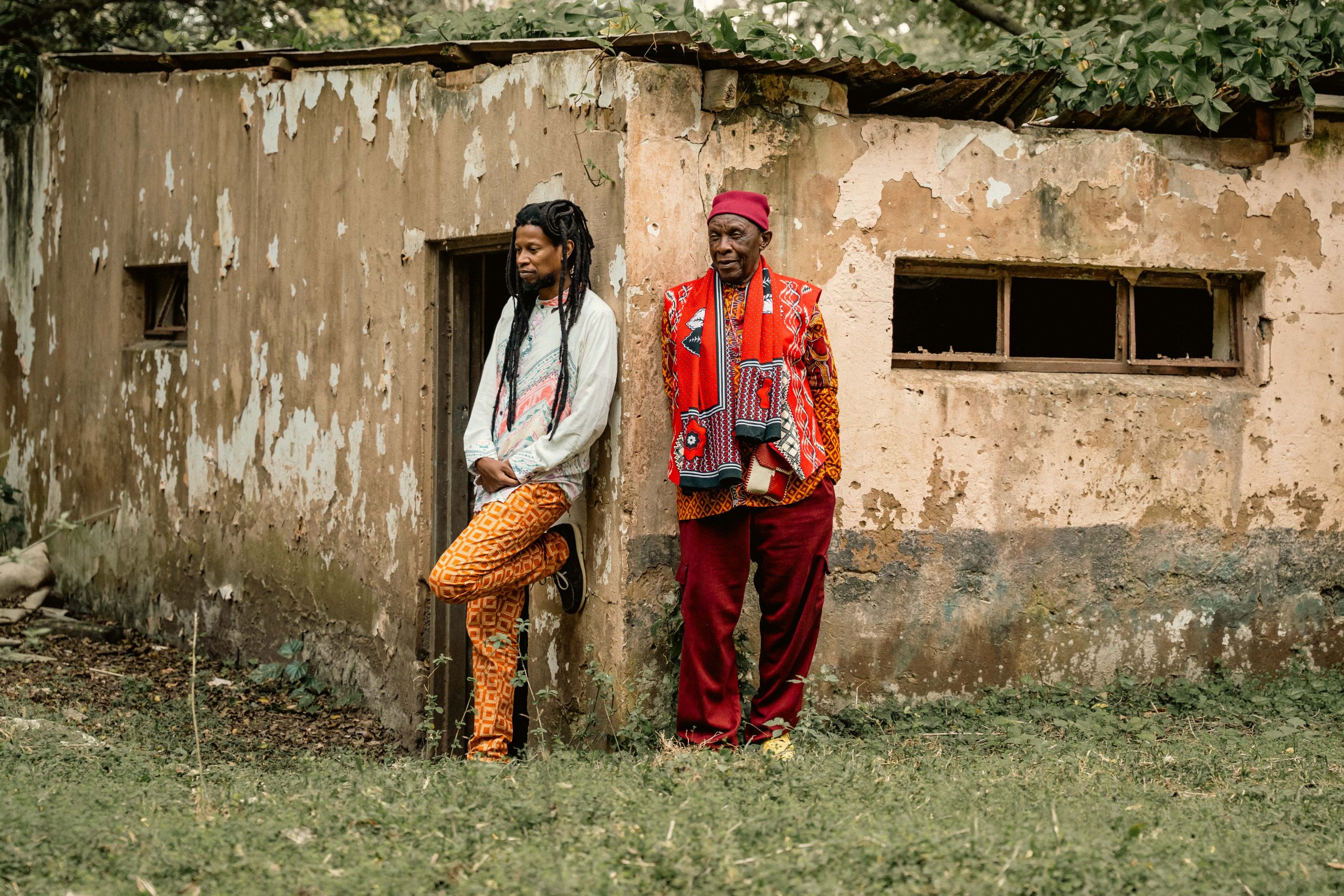
Dr Madala Kunene is the Durban guitarist revered as the king of Zulu guitar, a maskandi-rooted elder who spent decades building a style entirely his own. Sibusile Xaba is a guitarist and singer a generation younger, one of the more adventurous voices working in that tradition today. Kunene took him on as a protégé years ago, and mentor and mentee have since become collaborators. Xaba’s decade alongside him is one of the clearest examples of that we have.
Xaba isn’t sure exactly when it started. “I don’t know exactly when our relationship began but it must be chasing a decade,” he says. It began with Kunene calling him up to play guitar at his concerts, and the rest followed from a simple read of character. “Instantly there was trust from the master to say this young man has really put in the work and has got something to say.”
Learning outside the guitar
What Kunene hands over isn’t only technique. “His whole philosophy is, the life that you live results into the music that you make,” Xaba explains. The lessons run in two directions at once. “We practice the guitar but we also practice the philosophy outside the guitar and then that will translate into the music we compose.” Much of it is about temperament, Kunene “always encouraging us to keep a light heart to be constantly flowing with the ebbs of life.”
It is an apprenticeship in how to live as much as how to play, and it never really closes. “The great baba Madala is teaching us that we all are forever learning.” Xaba is careful about the hierarchy. “I don’t think I’m his equal but I’m his devotee indeed.”
One night in Utrecht
That approach shows up in the work. Their album kwaNTU was cut in a cottage in Utrecht over a single night, after the original plan fell through. “We had originally planned to record in a nearby national park but the weather forced plan B.” What followed was a “one take wonder where we recorded through the night, the music flowing and the creative energy in symmetry.” Xaba stayed up while Kunene rested. “I watched the sunrise with knowing the magic created with the grandmaster had been recorded.”
None of it is treated as heritage under glass. “The music can never be a museum piece, the music is for the people,” Xaba says, describing tradition as something that keeps evolving rather than something to preserve. That distinction matters for a city often tempted to freeze its culture for the tourists. The handover itself is old technology. “You know when history is told it is shared orally.”
Which is the point of putting the two of them on a stage together at all, as Jazz In The City does tomorrow at the Homecoming Centre. “I think it’s super important to hang with our masters work with them, learn from them, play with them and be inspired by them.” That is how a scene keeps itself alive. The masters play out loud, and the younger players in the room take the craft forward.