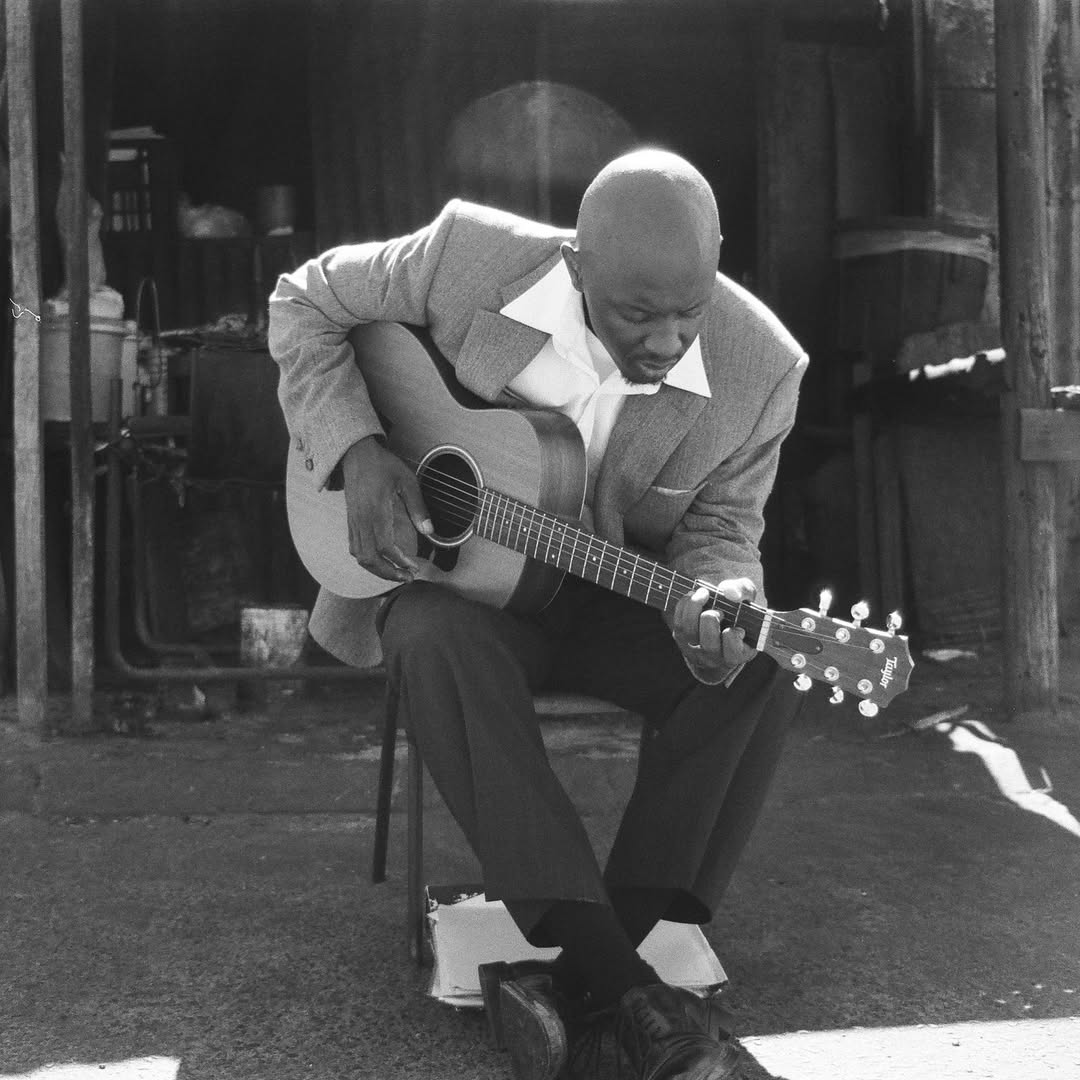
There’s a particular kind of artist Cape Town produces every few years. Not the loudest in the room. But the kind whose growth feels inevitable in hindsight — as if each stage was simply waiting for them to arrive.
For Jabulile Majola, 2026 is shaping up as that year.
On 27 March, he will step onto the Moses Molelekwa stage at the Cape Town International Jazz Festival (CTIJF) for the first time. For an Afro-folk singer rooted in Greytown, raised within a Christian children’s home context, and shaped by years of slow, intentional development, CTIJF is an arrival into what he once described as a “big world” that still manages to keep him feeling small.
“This is a very good question,” he says when asked about the internal shift between the boy who once dreamed of these stages and the man now preparing for them. “I think how I see it is that I’m still small, the world, the big world keeps me feeling small. I am a young man who was once filled with dreams, a vision, and who wanted to go places. And I think now that it’s all happening, I’m still that young man seeing this.”
That tension — between scale and humility — defines this moment in his career.
The farm boy in the city
Majola often speaks in metaphors. One of his favourites is the “farm boy moving into the city.” You learn new skills. You adapt. But you do not lose the core of who you are.
“I don’t believe that he ever fully adapts to the city life,” he says. “You would hope that there are these fundamental things that he’s learned on the farm that don’t go away from him.”
That refusal to shed origin stories is central to his work. Born Jabulani Majola, he performs under “Jabulile” — his biological mother’s name — as an act of tribute and reclamation. Identity, faith, naming, belonging: these are not aesthetic choices in his catalogue. They are structural.
It’s also why his move toward writing more intentionally in isiZulu over the past few years feels less like strategy and more like alignment. The language sits differently in the body. The storytelling feels closer to home. And on bigger stages, that grounding becomes even more important.
Kirstenbosch and the intergenerational moment
Before CTIJF, there was Kirstenbosch.
In February, Majola shared a joint bill with Vusi Mahlasela at the Kirstenbosch Summer Sunset Concert — one of the country’s most symbolic crossover stages. It was the kind of booking that quietly changes how promoters and audiences see you.
“It was a very big honour to share the stage with someone like that,” he says of Mahlasela. “He was always this South African-focused, Afro-folk artist. That wherever he went, he took South Africa with him. He didn’t change or become what he thinks people want him to be.”
For Majola, the lesson wasn’t about scale. It was about integrity.
Kirstenbosch also confirmed something he had prayed and spoken about for years. “I got a sense that really nothing is impossible,” he says. “It’s something that I have prayed about, it is something I had believed for that I would be able to do. I just didn’t think it would happen so soon.”
There’s a misconception, he adds, that artists are unrealistic dreamers. But resilience has been the constant thing in his journey. “Dreams do come true. It just takes a lot of resilience, it takes a lot of perseverance too.”
What makes this moment compelling is not just that he is stepping onto larger stages. It’s that he is doing so without discarding the intimacy that defined him in smaller rooms.
Sincerity at scale
CTIJF demands presence. The Moses Molelekwa stage carries legacy. Expectations expand with the room.
Majola’s answer is disarmingly simple.
“There’s a sense of honesty when you know, I am nervous, I’m fearful, I don’t think I can do this. Embracing that and then turning that into something that is beautiful but still honest.”
He doesn’t want theatrics that feel detached from who he is. He wants sincerity to translate technically — through band dynamics, arrangements, space. This time, he won’t be alone with just an acoustic guitar. He’ll be backed by a full band: drummer, keys, electric guitar, bass, and two backing vocalists. The sound will be bigger. The centre will remain the same.
“I’m doing everything, and being present and being honest about what I do,” he says. “There’s a big chance that I have rehearsed so much, but I might make a mistake from the first note. So let me be graceful with myself.”
That grace — toward himself and the audience — is part of why younger listeners are responding.
Taking the music to them
While many artists build mystique around exclusivity, Majola, while on tour, has intentionally made stops at schools and universities, choosing to go to young people rather than expecting them to come to him.
“The idea of the tour was that I go to them,” he explains. “You don’t come to me. When you go to them, they’re actually not aware of the fact that you’re coming. They don’t care about who you are. And so there’s a sense of it being humbling process.”
There’s something quietly radical in that approach. Afro-folk and jazz-adjacent music are often framed as genres for older, “intellectual” audiences. Majola rejects that boundary.
“Everybody can be impacted by a story of hope,” he says. “The power is not in how intellectual we sound, the power is in being able to explain it and bring it across in a way that is very simple but life-altering.”
For young Black creatives, especially those who don’t see themselves reflected in dominant industry narratives, that visibility matters. It expands the horizon of what is possible. “A young person gets better every single time their mind gets expanded,” he says.
Built slowly, built properly
Behind the scenes, his partnership with Danilo Queiros and the Quiet Life Co team has prioritised patience over hype. “[Danilo] didn’t say anything that was out of reach,” Majola says of one of their first meetings. The relationship focused less on chasing viral moments and more on falling in love with the craft.
“There was a point where the whole idea of stage and doing all this live stuff was not even an idea anymore because I was so in love with being in the studio and perfecting that side.”
That foundation is what now makes CTIJF feel like a continuation rather than a leap.
Lo and behold, 2026 finds him on the CTIJF lineup, alongside artists he’s eager to watch himself. “I am so so so excited,” he says, almost laughing at the understatement.
There is no chest-thumping in the way he speaks about it. No grand declarations. Just a sense that the Jabulile from Greytown has learned what he needs from the city, and brought something back with him.
CTIJF may be one of the biggest shows he has done to date. But if you listen closely, it doesn’t sound like a climax. It sounds like another chapter in a story he has been patiently writing for years.