Tag

Bridges for Music

Browsing

Athie Mbilini, who DJs as Athie Umgido, has spent this year on stages most Cape Town producers will only ever read about. Awakenings in the Netherlands, a run through Ibiza that took in UNVRS for elrow, weeks of dates across Germany and Portugal. Then he comes home, and the European CV does not travel with him. Some weeks he still opens rather than headlines, because a booking here follows relationships as much as a record.
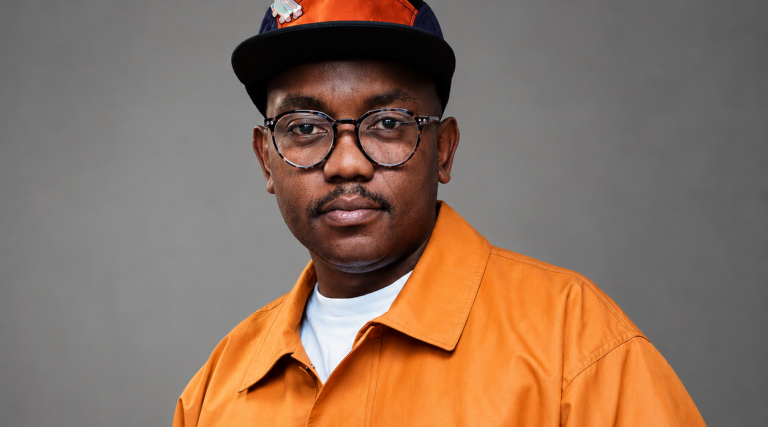
He has been doing this for about four years, and still asks whether he is doing it the right way. That question sits under his whole tour, and under one this city keeps avoiding. Cape Town is decent at getting the occasional artist onto a first international stage. It has built almost nothing to catch them after.

The first bridge is only the first

Athie will not let anyone mistake his run for a story about being discovered. One of his early breaks came through Bridges for Music, and it was not a career handed over. It was a slot on a cycling initiative raising funds around Amsterdam Dance Event (ADE). “They gave me access to an environment,” he says. What he did inside it, the relationships he kept and the rooms he pushed into, was his own work.

He is honest about how the money moves, because most people never see it. A single booking can sit on months of admin: finding a grant, writing the application, lining up a partner, building a project a funder will back. And the funding is fussy. Mobility grants carry age limits, career-stage rules and a bias towards educational tours and residencies over simply paying a South African to go and DJ, so even a ready artist finds the money does not fit what they need.

He is warm about Bridges and honest about its ceiling. “[Bridges for Music] might help you cross the first bridge, but there are many bridges after that.” He has watched people expect a festival before their first tavern booking. The real question, he reckons, is “how far can I take myself with the opportunities Bridges gives me?”

What the gig guide hides

A long European itinerary reads like money. It is not. Between visas, flights, trains and weeks of living away from home, his DJ fees and day job combined would not cover a run like this. What makes it possible is closer to barter. “A lot of what makes it possible is actually an exchange of support rather than a big performance fee,” he says. A promoter covers a train, a friend gives up a room, someone buys a bus ticket to get him to their city. Some fees come in under the cost of getting there, taken because the relationship might pay off later. “So there are shows where I’m not actually making money.”

Athie Umgido
Athie Umgido performing at GOAT Community in Portugal

The whole tour turned on one confirmed date, a booking at GOAT Community in Portugal, which grew out of meeting the founders through Melissa Kwan at Wonderfruit in Thailand and staying in touch. It gave him a reason to be on the continent, and everything else was built around it. Tell a promoter you are already in Europe and the ask is no longer a flight from Cape Town for one slot; it is a train and a spare room. A standing base in Hamburg, through his close friend Benjamin Adrion of Villa Viva and Viva con Agua, held the rest together. Not a spare bed for a night: between dates it gave him somewhere to return to and a network around it, much of why the routing was possible at all. Take it away and the tour does not shrink. It disappears.

None of it is charity or luck. “If you don’t have a traditional team around you, in some ways your community becomes your team,” he says: the friend with the couch, the promoter who makes an introduction, the person who keeps putting your name in the right rooms. A lot of that network started at AfrikaBurn. The tour closed this month on a Villa Viva Water Walk in Hannover, no accident: the support that carried the opening weeks was there in the last one.

Coming home to the same place

A tour only counts if it converts, into repeat bookings, better fees, a manager or agent, a label deal, a route back into those markets. Without it, an artist can spend months building momentum abroad and land back in Cape Town at almost the position they left. The missing infrastructure is not only what gets an artist out of the country. It is what turns one run into the next three.

Athie Umgido
Athie Umgido at Ibiza Airport

Part of the problem is a map. Cape Town makes artists with real followings and singular sounds, yet the commercial machinery, management, media, label deals, money, sits in Johannesburg. For an artist who cannot keep flying north, or does not already know the right people there, that distance is another wall.

Athie has watched where that goes. A local hero builds a real audience, and the structure around them never catches up. Momentum cools, another generation comes through, and someone who once looked close to breaking nationally is remembered instead as a Cape Town legend. Some burn out, some leave music. Being culturally important in your own city does not pay rent.

The rungs that are not there

Ask Athie what Cape Town is missing and he does not say funding, which is the lazy answer. He says it is the layer that moves an artist from locally ready to that first serious booking abroad, something between a music school, an artist and an agency: a structure that spots who is ready, teaches them how mobility grants work, and puts them in front of promoters. Readiness is the other half. “You cannot send somebody to Berlin simply because they deserve an opportunity. They also have to be ready for Berlin.” A grant will not fix an unfinished catalogue or a set that does not land. He also wants proper venues in the townships, where an artist can programme their own night and grow, because there is too little between a first local gig and a major stage. “That ladder needs more rungs.” His name for the absent machine is plain: “a stronger artist export and development pipeline.” 

Who gets to the door

There is also a racial and class dimension to who gets seen, developed and booked here, and Athie thinks it should be said plainly. Some of the sounds now filling the biggest stages, Gqom, Afro House, 3 Step and other forms built in Black South African communities, come straight out of the townships and working-class spaces. The artists who reach agencies, media, brands and international networks fastest are not always the people from those communities.

He is careful with it. He is not saying artists from more comfortable backgrounds have not earned their success, or that every booking comes down to race. Talent, audience, musical fit, relationships and timing all matter. But those relationships are not built on level ground. Grow up near the city’s established cultural networks, with transport, some disposable income, access to equipment and venues and people who understand the industry, and you begin within reach of where opportunities change hands. For a young Black artist in Khayelitsha, Langa or Gugulethu, the same journey can mean transport costs, few decent venues nearby, a thinner contact book, and not already moving in the circles where promoters, managers, media and brands look.

Which leaves a contradiction worth stating. Cape Town can get very good at celebrating and exporting Black township-rooted culture without building equal pathways for the Black township-rooted artists who make it. “If the industry wants to celebrate township-rooted music,” Athie says, “it also has to create fair access for the artists and communities that shaped it.” That is why the answer cannot only be more funding or more festivals. It means looking for talent outside the usual networks, building management and agency relationships inside township communities, putting real venues and development spaces there, and making sure the people who created these sounds are not still outside the door when the sounds become worth money.

Athie has crossed the first bridge and a good few after it, though never alone. He got across on a network built over years, Bridges at the start, then the promoters, the friends with a spare room, Benjamin Adrion and Viva con Agua holding the middle together. Sustaining it took years of relationships and constant improvising, because the structure that could carry an artist through does not exist here yet. It could. Build it once, within reach of the people already making the music, and the next run turns on infrastructure rather than luck.

Cape Town knows how to get someone across the first bridge. The rest of the crossing is what it has to build.