A locally-built app is trying to pull the city’s cultural life out of the global feed and into something human-curated. The idea is overdue. Whether the city shows up is the open question.
Every Cape Town musician knows the maths. You have a show. You try to think of a clever, unique, ‘authentic’ post that will cut through the algorithm. You post it. Then, to guarantee that people actually see the post on the platform where you built your following, you pay. And the audience you are paying to reach sits inside a feed that also wants to show them, in Benji Anstey‘s words, “American bands, British comedians, Japanese politicians, and the world more broadly.”
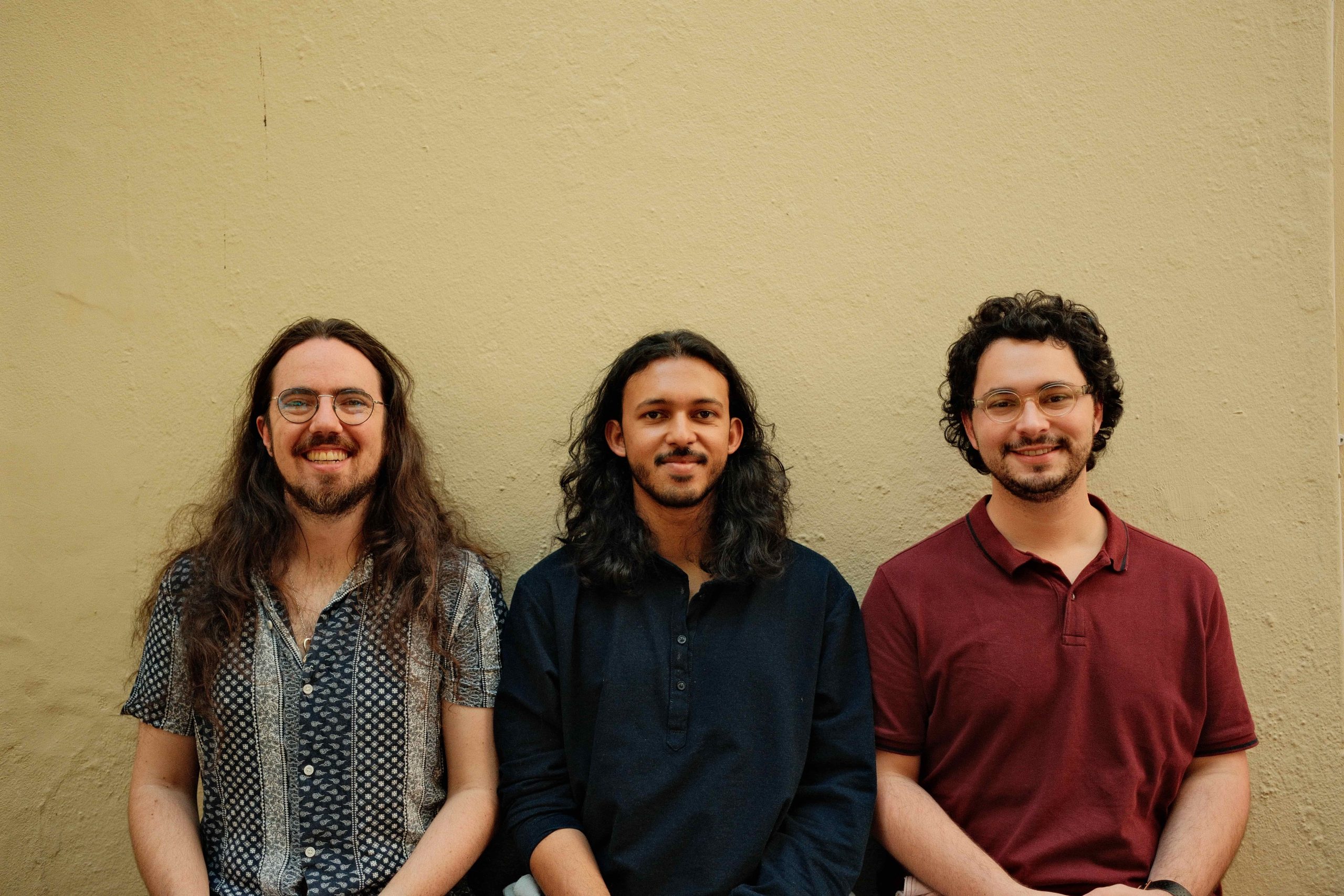
Anstey plays lead guitar in and manages Operation Khataza, so he has fought this from the coalface. His read on the deal is blunt. The platforms “convince us that our audience is there, get us on those platforms, and then slap a paywall between us.” That paywall is what The Scene was built to walk around. The app launched publicly on Wednesday 23 September, free on the App Store and Google Play, billed as human-curated and algorithm-free. It is the work of Anstey, Concept Records co-founder Benjy de Kock, and Kamil Adam Hassim, the three people behind Southbound Studios, the creative-tech company they founded to build and run it.
We should say where we stand. LGL is one of four gig-guide curators on The Scene, alongside Word Of Mouth, Culture Currents and The Cape Creative Collective, and we will be running selected pieces in its Zine. We are on it because we believe in it. The problem it goes after is the same one we have been writing about for years, and its ethos is ours, so take this as an introduction from people who want it to work.
The problem it goes after
The Scene’s target is discovery. Not the discovery of the next global hit, but the plainer question of how a Cape Town artist, venue or promoter reaches the people in their own city who would actually turn up. That is the gap the app is built into.
Benjy de Kock has run this play before. Concept Records, the independent studio tucked into Sybrand Park across from the Rondebosch golf course, has spent years recording young independent artists and turning it into a gathering point for the hard industry conversations that usually happen in private. It exists because the infrastructure his own band needed simply was not there. “I co-founded Concept Records in 2019 with my bandmates because we couldn’t access the infrastructure and expertise we needed to record our music, so we decided to build it for ourselves,” he says. “The same ethos has carried across to our work on The Scene.”
He is careful not to oversell what an app can do. Cape Town needs more venues, more funding and more stages, he says, and what ails the scene “has deeper roots than modern tech platforms.” Technology is “a critical ingredient,” not a cure. The ambition is narrower and more interesting than salvation. “By building digital infrastructure that is not global in ambition, we are attempting to create a space for people who share the same city but may otherwise inhabit drastically different digital environments.”
Off the feed
So what is it? At the centre is a human-curated events guide with live maps and in-app ticket links, wrapped in a Social tab, a Zine carrying local journalism, podcasts and short films, and a Scene Studio backend where promoters and venues manage their own listings. Anstey is insistent it is not another social network, and his argument is structural. Because the whole thing is capped at one city, there is a finite amount to show you. “You’ll reach the bottom of the ‘What’s on This Week’ tab at the end of the week,” he says. “The Scene’s risk of quietly becoming another feed is as significant as the risk of a newspaper becoming a feed. It can’t.”
Curation is where LGL and the other curators come in, and where the obvious worry lives. Is a small group of anointed tastemakers just gatekeeping under a friendlier name? Anstey argues the reverse, that curators surface events people would otherwise miss, and that the ranking is not for sale. When more than one curator backs an event it earns a silver, gold or rainbow skin and rises to the top of that day’s guide. “Ranking is determined not by budget size, but by how embedded a band, venue, or promoter is in the city’s existing networks,” he says. Anyone can submit an event, for free.
On data the distinction is finer than a flat no. What The Scene refuses is surveillance. “We do not track your specific behaviour across our app, monitor your interests, or use them to build a profile on you to serve you ads,” Anstey says. No cross-app tracking, no harvesting, no profile built from what you do. What it leaves room for is advertising you have opted into on your own terms. Hassim gives the example of a user who lists their area, and a small local business that wants to reach people in that area. The Scene would connect the two. What it will not do, in his words, is “spy on messages, data and build profiles of users for targeted ads.” The difference is who declares the information. On a surveillance platform the system infers it by watching you. Here, the claim is, nothing is used that you did not hand over deliberately, and Hassim notes Fabrik has no tools for behavioural surveillance in the first place.
Who owns the room
That leads to the question every principled platform eventually meets. Who pays for it? Here the answer is more candid than most launches manage. The Scene did not raise a war chest. It went through Ambient, the incubation programme run by immedia, a 25-year-old South African tech company, and it is built on immedia’s Fabrik platform. De Kock frames this as staying alive without borrowing against the future, a setup that “keeps our costs of scaling manageable.”
The revenue plan leaves independent artists out of it. “We will never rely on surveillance advertising or charge independent artists just to make their gigs visible to their own fans,” De Kock says. The money is meant to arrive later, from established venues, festivals and promoters paying for the heavier tools in Scene Studio.
Worth naming plainly, since we are anti-hype about our friends too. A good deal of The Scene’s founding language, the talk of community infrastructure and opt-in data and sovereignty, is inherited. It comes from Ambient’s “Sovereign Social” philosophy, the idea that independent communities should own and run the architecture of their own digital lives. That does not make it borrowed in a cynical sense. immedia is a local company selling the same anti-hyperscale idea, and the founders have built a company of their own around it. Southbound Studios, the outfit the three of them started to make and run things like The Scene, owns the platform’s data outright, not immedia. Hassim is straight about what that does and doesn’t prove: The Scene is sovereign in that three independent artists used a commercially available technology to build it, which means, as he puts it, “anyone could theoretically do this for any social-sphere.”
The mechanics are ordinary in one way and unusual in another. A developer having access to the data its own app generates is how things normally work. Three people using an off-the-shelf product to build and run a social platform this way is not, novel enough that immedia created Ambient to incubate exactly these cases, Southbound among the first. And the surveillance point Hassim made earlier is really a point about the tooling. Fabrik has nothing built in for behavioural tracking, so the refusal of surveillance comes with the tool they chose rather than added on top. What sets The Scene apart is the plumbing and the philosophy together. The ethic of digital sovereignty is the part the team puts its name to, “something we expect our communities to be able to hold us accountable to.” That is the right thing to promise, and it leaves the weight on Southbound keeping it. De Kock says any outside money will be “strictly patient, mission-aligned funding.” A good intention, held to account, is the whole model.
Whether the city shows up
The honest catch is the one Anstey names himself. Cape Town’s entertainment economy is not small, he points out, reeling off Beatenberg’s tenth-anniversary show and Manana at the Baxter as evidence that rooms do fill. The thing he actually wants solved is attention, “how do we capture a larger segment’s attention and expose them to the art that we’re making.” An app built to route around the algorithm still has to crack that, without an algorithm to do the routing.
Which puts The Scene in the same spot as every venue and band it lists. You can build the room. Then you have to get people to walk in. De Kock is clear about the limit himself. The Scene “cannot change the dynamics of the industry on its own, but it can create a better place for these important conversations and connections to take place.” It is the right experiment, run by people who have earned the standing to try it.
Now the city has to open the app.