Cape Town loves music in a way that’s hard to argue with: you can feel it in the pockets of live performance that keep multiplying, in the crowds that show up when something is truly special, and in the sheer range of sounds that can exist in the same weekend. We’re a city of musicians, listeners, and cultural operators who know how to make something happen — even when conditions aren’t perfect.
That’s why the Cape Town International Jazz Festival (CTIJF) matters as more than just a weekend out. Since 2000, when it began life as the North Sea Jazz Festival Cape Town (a collaboration with the Netherlands’ North Sea Jazz Festival), CTIJF has operated as a kind of cultural proof-of-life: a statement that Cape Town can host a world-class festival built around musicianship, improvisation, and African musical lineage.
But legacy festivals have a universal challenge. When you’ve been around long enough, you can start to feel inevitable — something that “just happens” each year, rather than something that keeps actively belonging to its city in fresh, living ways.
Over the last year and into this one, CTIJF’s hosts, espAfrika, have started tackling that challenge differently: not simply by chasing louder headliners or slicker marketing (though the visual refresh has certainly made noise), but by shifting the centre of gravity toward community — toward the networks, conversations, venues, and education that make a music culture sustainable long after the final encore.
2025: the weekend still mattered — but the lead-up started to change
Last year’s CTIJF (25–26 April 2025 at the CTICC) landed with the familiar festival stakes: big stages, major bookings, and that annual sense that Cape Town becomes a meeting point for local and international jazz audiences.
But what’s been striking since then is how espAfrika appear to have treated 2025 less like a finish line and more like the start of a longer arc — one that keeps jazz present in the city’s bloodstream all year round, not only when the wristbands go on.
That shift becomes clearer when you listen to how the team talks about their role now. Mariana del Carmen, espAfrika’s Talent & Music Coordinator, described the internal mindset change in unusually direct terms: “We really resonate with the term ‘cultural custodian’ […] We intentionally started with the Conversation Series because it was a way for us to begin with listening before we act.”
That’s a subtle but radical repositioning. A festival isn’t only a booker and a builder of stages. It’s an organiser of relationships.
2026: “Legacy meets tomorrow” can’t just be a slogan
CTIJF 2026 is set for 27–28 March at the CTICC, and the initial announcements lean into that global-meets-local promise: Jacob Collier, Yellowjackets, Jasmine Myra, and the return of Yussef Dayes, alongside a deep bench of South African and African artists.
But the more important story isn’t only who’s on the poster. It’s how the festival is being made this year: as a year-round cultural entity with multiple entry points for different kinds of people — musicians, industry workers, young listeners, and those who simply can’t afford the main weekend.
The Conversation Series: building the room before booking the room
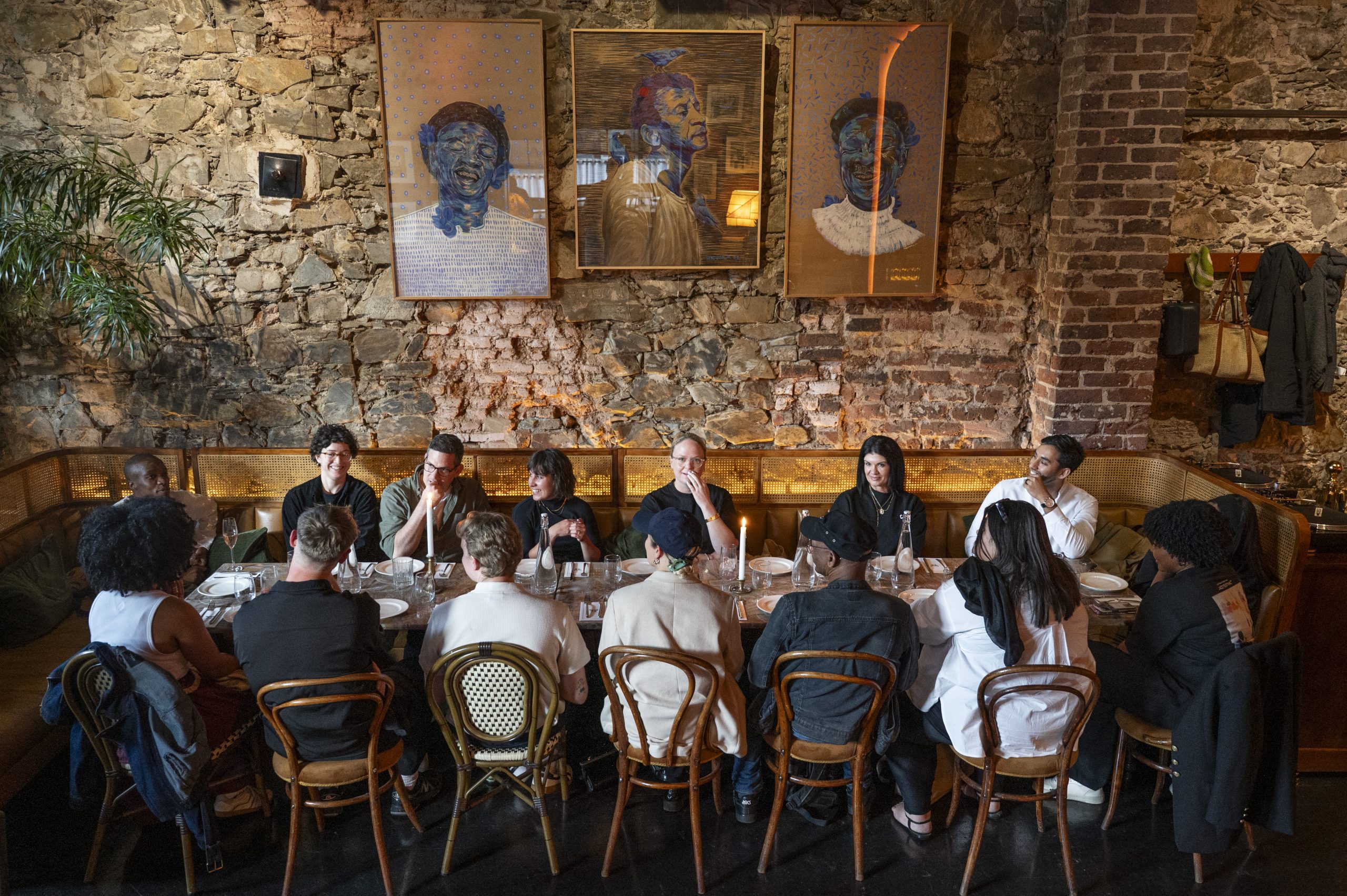
The CTIJF Conversation Series (hosted at The Athletic Club & Social) has been framed as an effort to expand dialogue about jazz in the context of a global festival era. But it’s also been practical: a place where musicians, venue operators, ticketing platforms, media, and behind-the-scenes workers can actually hear each other.
Del Carmen’s point that “the music industry is not just made up of musicians” lands here with force — because a thriving music city depends on the whole ecosystem moving together.
When you convene the ecosystem, you’re not doing “content.” You’re building capacity.
Jazz Rising: free doesn’t mean small
Then there are the pre-events that bring the festival out of the convention-centre bubble. For example, CTIJF’s Jazz Rising event, which took place on 30 January 2026 at Grand Africa Café & Beach, was positioned as a free entry event that “bridges the gap between traditional jazz foundations and the vibrant ‘New School’ of South African sound.”
That phrase — bridge the gap — is doing a lot of work. Because the real risk for a legacy jazz festival isn’t “going commercial.” It’s becoming culturally isolated: beloved by those who already know, invisible to those still forming their taste.
Access as strategy: the Free Concert, and a very deliberate Rosies move
The festival’s free open-air concert at Greenmarket Square has long been a civic tradition, and it returns on 25 March 2026, headlined by Zolani Mahola.
But there’s another access shift this year that feels particularly telling: the Rosies stage. Historically, Rosies has been treated as the purists’ haven — more intimate, acoustic, and previously requiring an additional access fee. While many saw this as a premium add-on for exclusive stage access, the additional charge was, in fact, introduced to support crowd control and risk management in a smaller, more contained venue environment.
In the interview, Del Carmen confirmed a change that reflects a clear response to audience feedback: Rosies will now be free to access, with further details on the process for entry to be announced.
That’s not just a nice perk. It’s a statement that “purist jazz” isn’t a luxury product — it’s part of the city’s cultural commons.
And this year, that space carries particular symbolic weight. The Rosies lineup includes legendary Cape Town pianist Abdullah Ibrahim — born and raised in District Six — alongside artists like Jasmine Myra, Dr Sibusiso “Mash” Mashiloane, Tutu Puoane, and Varijashree Venugopal. Ibrahim’s presence, in particular, quietly ties the festival’s future-facing programming back to the city’s deepest jazz roots.
The real achievement: staying truly jazz while becoming truly Cape Town
There’s a lazy critique that appears every year: the lineup drops, a few names get screenshot, and the hot take goes out — this isn’t jazz anymore.
But what del Carmen points out is historically accurate: CTIJF has always made room for the jazz-adjacent edges (house, hip-hop, R&B, kwaito, soul) without surrendering the core.
The difference now is that the “core” is being defended not just through programming, but through community practice: conversations, workshops, masterclasses, and year-round visibility that treats jazz as culture, not merely genre.
In a city that’s constantly evolving its musical identity, CTIJF’s recent step-up is meaningful precisely because it’s structural. It’s not only “come watch the greats.” It’s: come into the network, learn the system, meet the people, and help raise the standard together.
That’s how a legacy festival becomes a city festival — without losing what made it worth inheriting in the first place.