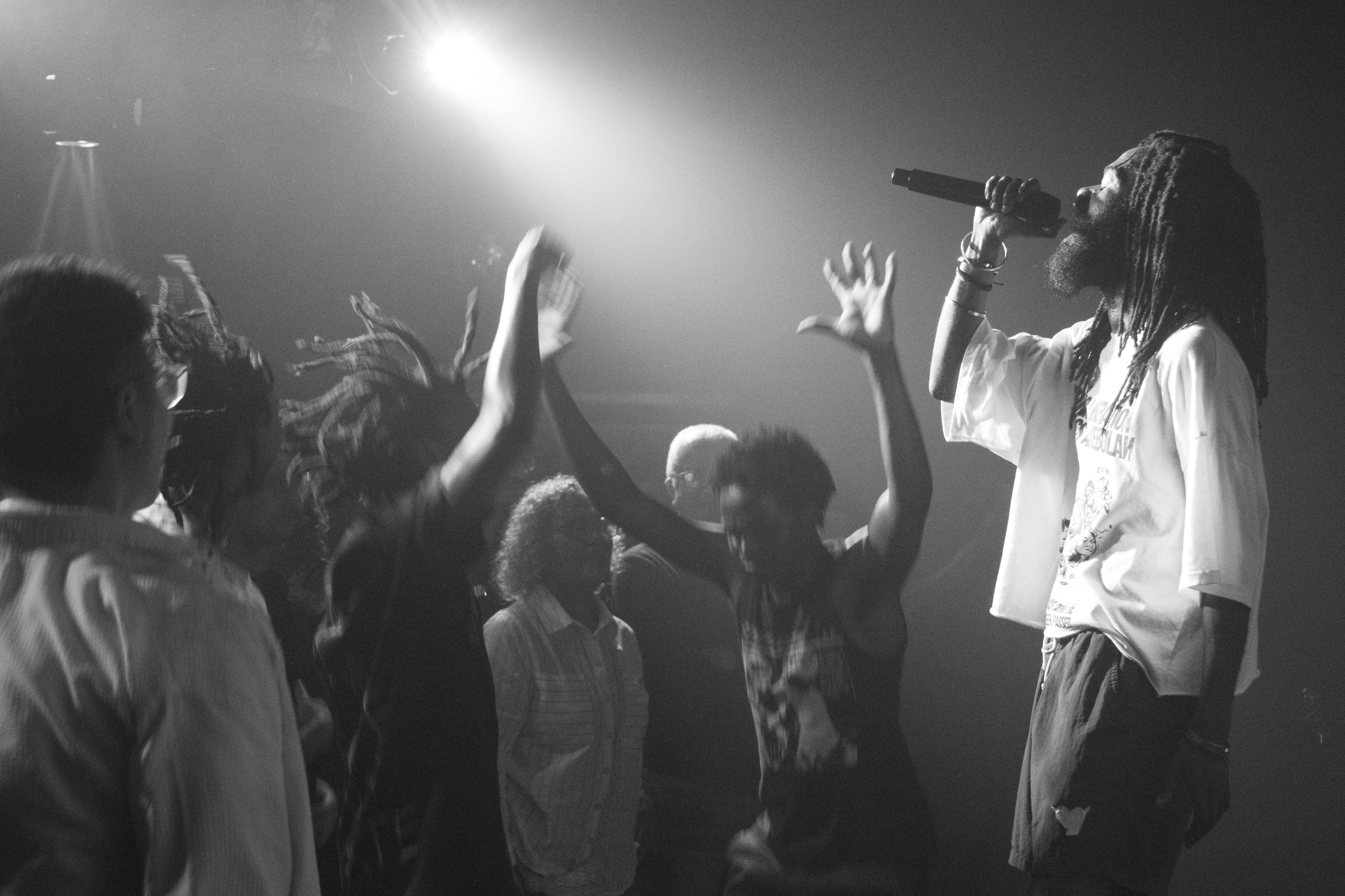
The Cape Town eight-piece built a devoted live following long before they released a note. Their debut single, recorded at Concept Records, is less a beginning than a record of everything that came before it.
There is a way most emerging acts arrive: a single first, an audience hopefully after. Operation Khataza did it backwards. The Cape Town eight-piece—Sanele Blaai (founder and frontman, performing as uFarrah Khataza) on lead vocals, Jarryd “Chuckie” Alexander on bass, Vuyo Nkasawe on keys, Timothy Fortes on drums, Benji Anstey on lead guitar, Fabian Arries Selote on spoken word, and Lois Flandorp and Mariana “MANA” del Carmen on vocals—has for close to three years been a fixture of the city’s underground rooms: mosh pits, sing-alongs, a crowd that knows the words, without a proper studio release to point to.
Now there is one. Mantra is out, recorded and produced at Concept Records, and the band is clear that the wait was the point.
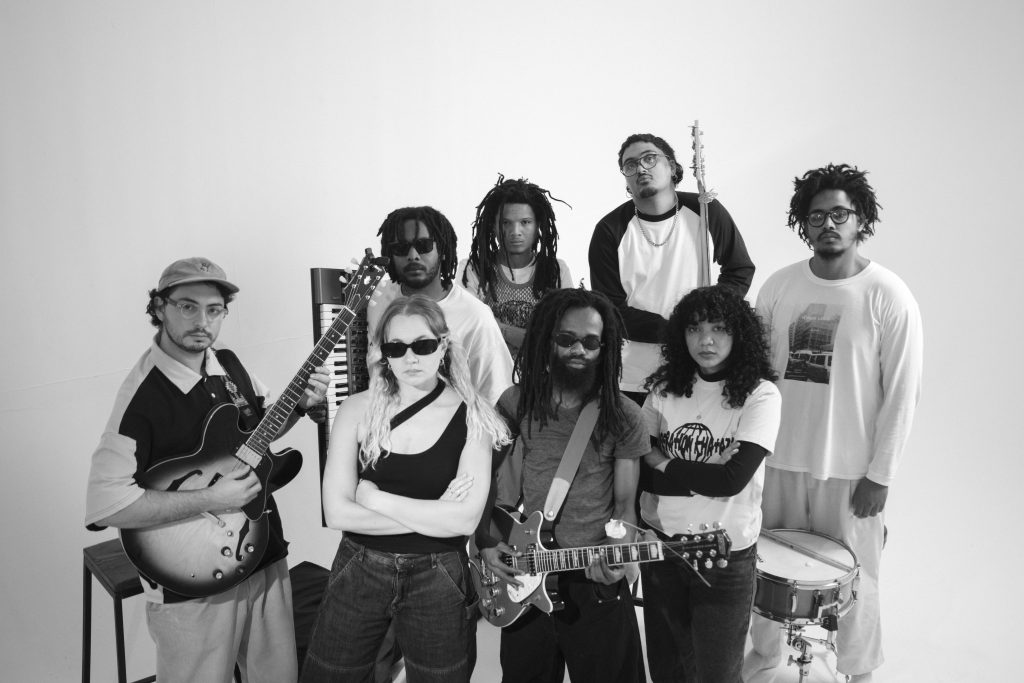
Bottom row (from left): Benji Anstey, Mariana “MANA” del Carmen, Sanele Blaai and Lois Flandorp. PHOTO: Rishi Prag
The years before the record
Alexander reaches for geology to explain the timing. “When a tree dies, it goes underground, and it gets pressed by the soil and the minerals, and it turns into carbon and then diamonds,” he says. “A year ago, the band was carbon. It was a block of coal, but now we are diamonds. It’s polished. So now it’s ready.” The slower route was deliberate: “It takes time to build a reputation, especially when you’re trying to do it from the ground up, the way we are doing it,” he says
That time on stage did work a studio session can’t. “The process doesn’t have to be rushed,” says Nkasawe. “What we’ve learned from the live circuit over the past couple of years is which parts of the songs could have more energy, which parts could be a bit more intimate. Those are the sort of things you pick up in a live setting that you don’t necessarily get by going straight to the studio.” For guitarist and band manager Benji Anstey, the circuit was also how eight separate players became one sound. “In order for the music to sound cohesive in studio, we needed to get to know each other,” he says. “And the only way to get to know each other was to play with each other, and play in front of audiences, and have that pressure.”
A band that protects the band first
Holding an eight-piece together in 2026 is its own discipline, and the group is candid that the music sits downstream of the relationships. “We managed to take care of our relationships as people first, then the music,” says Alexander. Blaai, frontman, founder, and the figure behind the uFarrah Khataza persona, picks it up: “We nurture the relationship we have amongst each other. There’s a lot of things that are uncomfortable, that need to be said, and we are just very blunt people. We say it like it is. The power of communication is what really works for us. We respect each other, we love each other, and I think it just reflects in the music.”
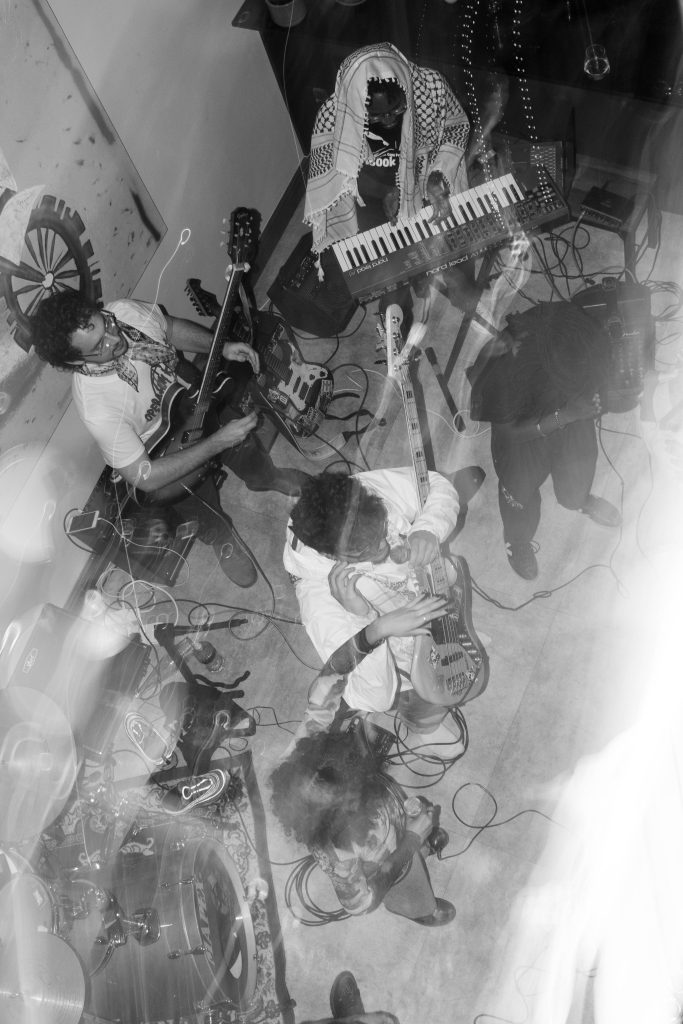
The range of backgrounds—jazz, spoken word, gospel, alternative—could pull in eight directions. Fortes frames it as a kitchen. “It’s like a melting pot, the curry,” he says. “Everyone brings some spice, you put that all together, and that’s how it sounds now.” Blaai’s image is closer to a playground: “We’re a bunch of kids that play alone at the crib, and then we found friends. You have this game that you all find, to be in sync with, but everybody has their own character within this game.”
Building the room they needed
Let’s Get Local has argued before that Cape Town has no shortage of talent and a chronic shortage of the infrastructure that lets ambitious projects survive. Anstey doesn’t dispute the diagnosis, he just refuses to wait for it to be solved. “Cape Town lacks the infrastructure to support ambitious projects,” he says, “but the nature of the project we’re trying to create is that it’s about community. There’s lots of fertile ground for community, and so in building community, we’re building our own ecosystems, and not waiting for one to exist.” It is a quiet rebuke to the wait-for-permission model: a band that chose Concept Records and a Concerts SA-backed tour over a quick upload, and grew its audience in the same Observatory rooms that raised it.
Why Mantra, why now
The choice of debut single was part strategy, part survival. Flandorp is blunt about the economics: “We needed money to pay for mixing, for mastering, food, all of that. It is only because of whoever has supported us financially that we were able to release at this time.” But the song earns its place. “There’s so much going on, and it’s got people depressed, it’s got people burned out,” they said. “What the world needs more of is affirmation, a mantra to keep going. It’s like when a pastor preaches a sermon, but it’s a sermon that they need. We all need this affirmation, and so do you.” Its isiXhosa refrain—bambelela wena, qinisela wena, uzo phumelela (hold on, have courage, you will succeed)—is exactly that.
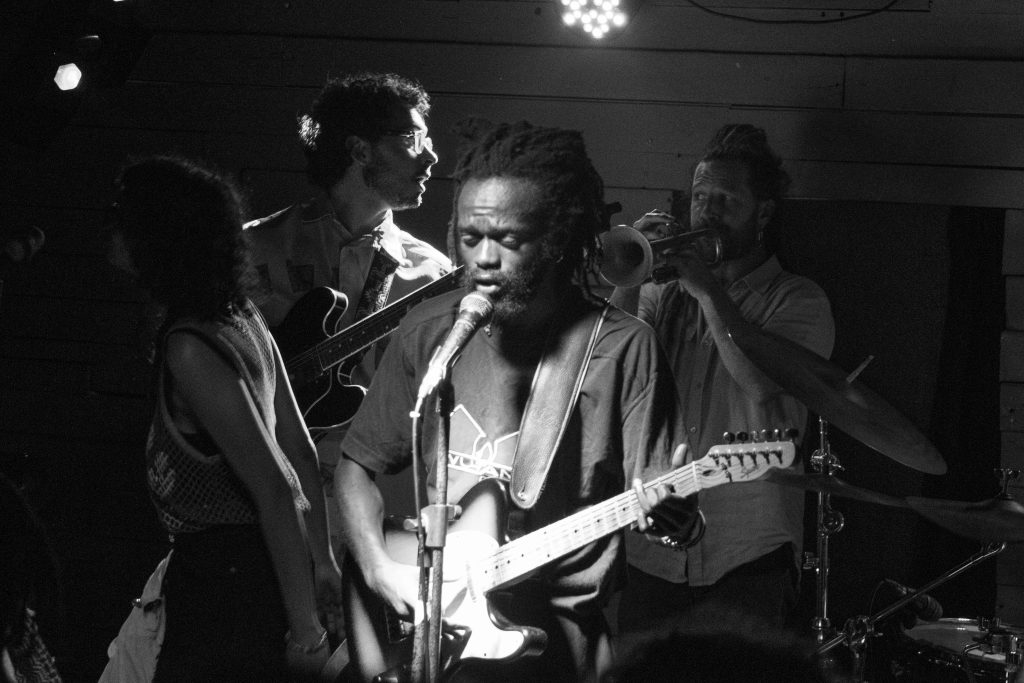
Blaai calls the track “triumphant… it’s the future,” and Selote, who carries the spoken word, says it had to come first: “It’s the perfect single because all of us are on it.” Ask where they want to be in five years and the answer isn’t chart positions. “I hope people look back and say that was a band that showed people that being in music is about community,” says Anstey. “Forming something together, showing love to other people, and sharing that with people.” Alexander, characteristically, puts it shorter: “That’s actually all it’s about.”