There is a particular kind of advice that gets handed to emerging artists in Cape Town when a brand finally comes knocking. Soften the edges. Be easier to work with. Make yourself more palatable. It is well-meaning, and it is almost always wrong.
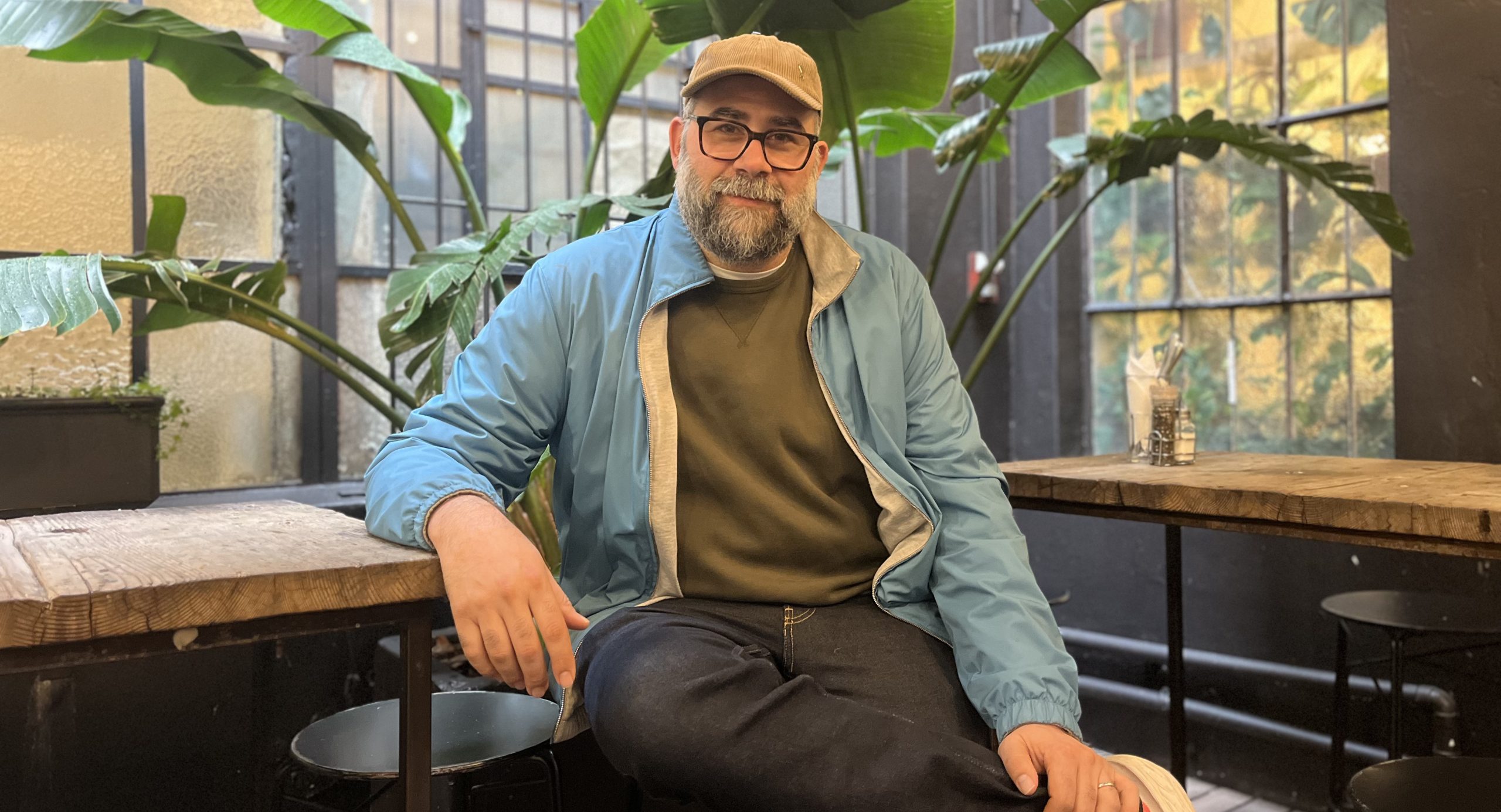
We sat down with Many Ameri in Cape Town recently. Ameri co-founded Yadastar, the consultancy that built Red Bull Music Academy (RBMA) from its 1998 launch through to its close in 2019, and he is the closest thing the music industry has to a working answer to a hard question: how do you take brand money without flattening the culture you are trying to fund? RBMA ran in more than 60 countries. The most useful detail isn’t the alumni roster — it is that when RBMA left a city, it tried to leave something permanent behind. Ameri is now in South Africa building a new venture aimed at connecting creative communities across the African continent. So when he talks about how artists should approach brand deals, this is not retrospective wisdom. He is doing it here, now.
The first thing he wants to dismantle is the instinct to round yourself off. “I would really start with, it’s not like positioning yourself to be more brand-friendly or more accessible. I don’t think that’s the thing.”
The reason a brand is at the table is that the artist built something interesting without the brand’s help. The thing the brand wants to attach itself to is the thing that gets sanded off the moment the artist tries to perform compatibility. “Often it is because they’ve got something really interesting going and they’ve managed to do that without the brand,” Many said. “So if you start with that understanding […] then protecting that is in the interest of the brand as much as it’s yours.” Protecting your edge is in the brand’s interest, too. You are not asking for a favour by holding your ground.
The other failure mode Many flags is sharper. Some artists hear that a brand person had to argue for them internally and respond, as he put it, “Why wouldn’t they work with me? I’m the superstar.” That instinct kills the relationship before it starts. The brand person did not arrive at your name by accident; they arrived because they personally stuck their neck out, and the work of the partnership is making that bet pay off for them as well as for you.
The framework Many keeps returning to is meeting at “eye level,” and here he reached for the well-known fable of The Chicken and the Pig — the chicken proposes ham and eggs, the chicken contributes, the pig dies. “You want a relationship where the other person doesn’t die in the partnership,” he said.
For an artist, that means an open conversation: asking what each side is putting in, what each side stands to lose, and whether the answers are balanced. It also means being demanding of the other side — the brand has to engage too, has to say what it is actually trying to build. A difficult conversation at the start is one of the better indicators that a partnership will hold. Not combative, but honest, clear, and willing to ask the questions most people skip. The romantic version (let’s just make the art and figure out the rest later) is what turns into resentment six months down the line.
That honesty has to run in both directions. Many’s first job, launching Adidas Originals in Germany in the mid-90s, was largely about telling people no. The point of being clear about why a pitch wasn’t a fit, he explained, wasn’t to coach people into delivering what the brand wanted — it was for them to understand what the brand was trying to build, so that the next time something genuinely fit, they would recognise it. “If you’re able to tell someone, look, what we’re trying to do is this, what you’re doing is great, but it’s not that, then they’ll call you the third time and they’ll deliver exactly what you are looking for if they’re the manager,” he said. “How should you know that, when all you get is crickets?”
It is not artists shapeshifting to suit brands. It is brand-side people being honest enough that artists and managers can decide, with full information, whether there is ever a real fit. Sometimes that conversation tells you a brand and an artist will never work together, which is also useful, because nobody wastes time on a partnership that was never going to happen. Ghosting kills the pipeline. A clear “no, but here’s what we’d actually want” builds it.
Which kinds of brands can carry the slow work of culture is its own question, and Many’s answer is more nuanced than the easy version. He is not dismissing big publicly traded brands, which often have the resources artists need; he is also not pretending every founder-led indie has the budget to back a long arc. The sweet spot is finding either an organisation agile enough to give a project room to develop, or a person inside a bigger company who sits high enough and believes in the work enough to protect it internally. “It’s sometimes a year, decade-long process,” he said. “It’s not something that’s decided in the boardroom and just switched on as you would when you have everything you’re doing being so easy to track and calculate.” The skill is reading which side of that line a given conversation is on, and not confusing budget size with patience.
The hardest test Many applies to brand-funded cultural work is also the simplest. He learned it in São Paulo, where RBMA ran its programme in a private house. The space wasn’t Red Bull’s to keep, and there wasn’t another venue available — and that, Many said, was the painful lesson. It wasn’t a brand being wasteful. It was his team settling for a venue that solved the problem in front of them without securing the long tail. “What’s the purpose of that?” he said, recalling the equipment being cleared out at the end. “We just turned up the volume, we’ve got all these people here who would like to continue collaborating with us, why shouldn’t this place somehow keep existing?” From then on, the test was different. “When we build things, we try and see how they could be continued.” Sometimes the studio stayed because Red Bull adopted the building. Sometimes a local collective or city council took it on. The form mattered less than the outcome: when the campaign ends, what is still standing?
That question is a more useful KPI than reach or engagement. If the answer is nothing — the activation happened, everyone got paid, the photos went up, the lights went off — then it was advertising dressed as culture, which is fine, but artists should know which kind of deal they are doing.
The artists who do this well are not the ones who became more “marketable.” They are the ones who got clearer. About who they are, what they will and won’t do, and what they actually want from a partnership beyond a fee. The brand is not the audience for that clarity. You are.
This piece sits next to a longer discussion we have been having on this platform about Cape Town’s missing music industry: venues lost, festivals that recovered unevenly, the institutional gap between talent here and the professional services it would need to scale.
Many’s two decades of building something that actually worked points at a smaller, harder thing inside all of that: the conversations that happen across the table when a brand finally shows up. Those conversations are infrastructure too. And the artists who learn to have them at eye level — clear, honest, unafraid to say no, alert to what should remain when the campaign is over — are the ones who will end up with careers that outlast the campaign.