Cape Town’s live circuit has always had a particular kind of magic: a city where the stage can feel like a laboratory, where the best players aren’t just “supporting” a headline — they’re quietly rewriting the night in real time. And right now, if you’ve been to the right show in the right room, there’s a strong chance the live engine you’re remembering wasn’t only the singer up front.
It was The Hii ROLLERS.
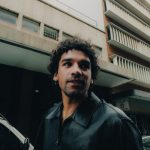
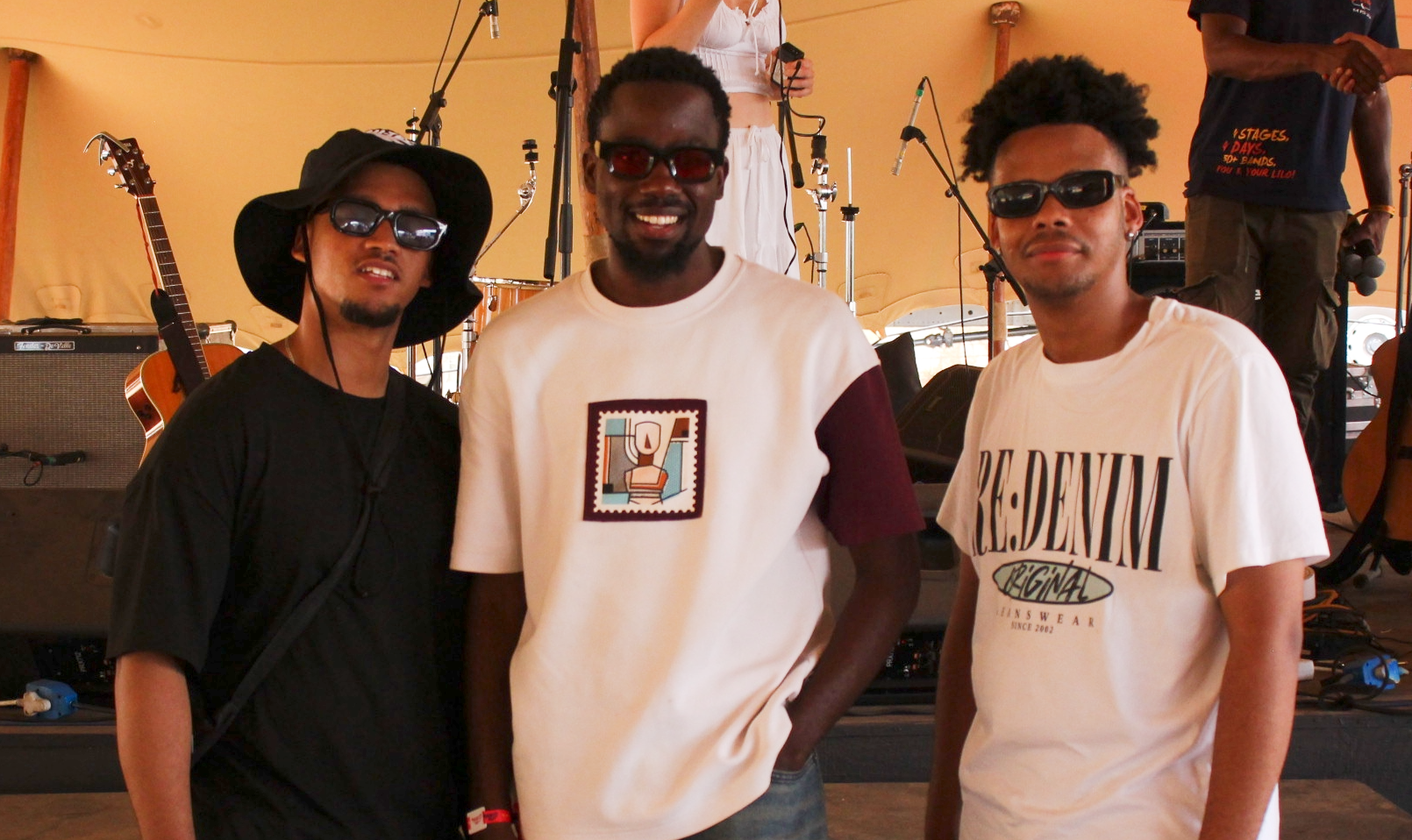
Charlton Abrahams on bass, Elton Abrahams on drums, Blessing Biyandu on keys and musical direction, and Keanon Mac Curry on lead guitar (currently on residency in China).
Throughout the years, the live unit has also featured trusted collaborators, such James Carl Smith on keys (who also joined them on their Eastern European tour), Eli Small on lead guitar, Shaw Komori on trumpet, Winston Siljeur on keys, and backing vocalists Jordan Baker, Bronwyn Neethling, Mia Shaked, Marzia Barry and Nicole Shamira.
The Hii ROLLERS are a Cape Town-based four-piece that keeps showing up behind the artists shaping the city’s sound — and then walking offstage like it’s normal to be that tight. On paper, the formula looks classic: bass, drums, guitar, keys. In the room, it hits differently. It’s jazz-level musicianship plugged into contemporary R&B, funk, soul — with a hip-hop-adjacent instinct for momentum. The kind of band that can make a familiar chorus feel newly dangerous, or turn a mid-tempo groove into something that lifts the room.
The industry language would call them a “backing band.” The Cape Town audience language is closer to: those guys.
A band before the billing
The funny thing is: The Hii ROLLERS didn’t begin as a brand built around someone else’s spotlight. They existed before the name you might associate them with. Blessing Biyandu (keys and musical director) traces the story back to 2019, long before the “LUUKHANYO & The Hii ROLLERS” billing became familiar to local lineups. “Basically, the band actually formed a long time before we met LUUKHANYO, around about 2019. Initially, we were called The Pilots,” he says.
That origin matters, because it explains why the band doesn’t play like hired hands. There’s an internal identity at work, a shared sensibility, even when they’re serving someone else’s songs. The “Hii ROLLERS” name may be tied to LUUKHANYO’s “Hii ROLLER” era, but the band’s DNA predates the moment the city started paying attention.
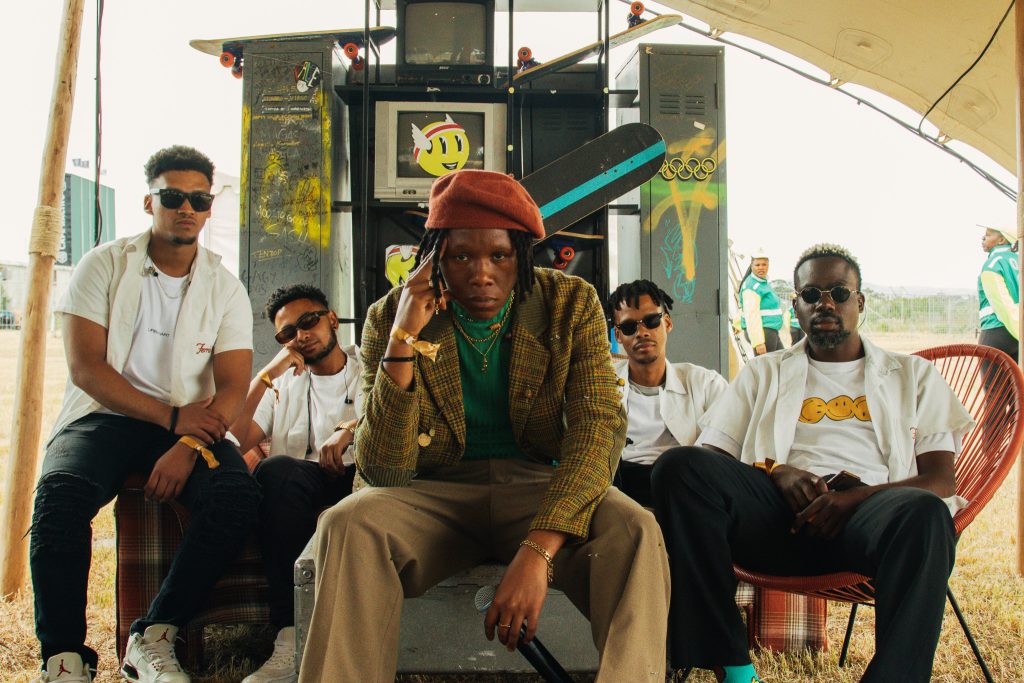
And once they were in the mix, the relationship became symbiotic. Blessing is blunt about the weight the band brought to the stage: “We brought the element of the Hii ROLLER to LUUKHANYO, and we saw that that had so much weight.”
Not just a backing band
There’s a specific kind of backing band that disappears into a setlist, competent, professional, there to do the job. The Hii ROLLERS do the opposite: they honour an artist’s vision, then pull the music into sharper colour.
Elton Abrahams (drums) describes the order of operations like a mission statement: artist first, always. “We’ll put whatever the artist’s vision is first, internalise the music and play it as it is,” he explains, before admitting what everyone in the crowd already knows: the second rehearsal is where the real stamp arrives. “At no point do we do that after the first rehearsal. The second rehearsal, we kind of bring the Hii ROLLERS way out, and then we sell it to them.”
It comes from a sense of authorship rather than ego. They’re not trying to rewrite an artist into a different act. They’re doing something subtler (and rarer): treating the live show as a creative work, not a reproduction.
It’s also why they’re consistently described as a “tight” live band. Tight doesn’t mean rigid here. Tight means connected: the drummer’s count-off discipline, the bassist reading the artist’s next move before it happens, the MD shaping transitions, the whole unit moving as one organism.
Charlton Abrahams (bass) frames the constant in their sound as something deeper than genre: “We always bring soul into the music. We’re essentially church boys. We keep that gospel sound there without you even knowing it’s gospel.”
That’s the secret sauce: gospel logic without gospel branding — the lift, the drama, the sense of “here comes the moment” baked into intros, turnarounds, and outros.
Why they might be Cape Town’s best live support weapon
Look at the range of stages they’ve stepped onto: LUUKHANYO, Jackie Queens, Teagan, Kila G, Karen Zoid, and a list that keeps expanding — Alex Biaya, Seth Grey, Scintilla, Cellz, Luvuyo, SUNAURA, i-SO, Gemma Fassie, Luh’ra, Yamiko, Jordan Baker, Crunchy Sweater, plus collaborations with artists from the UK, Chicago, and Russia.
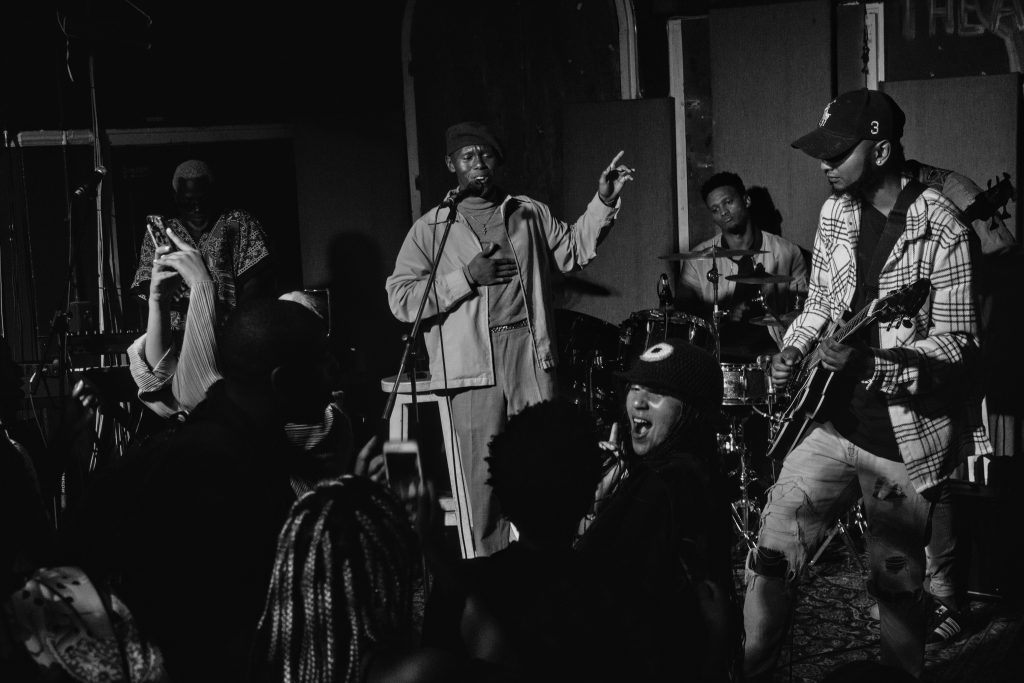
The range isn’t only about genre, but about function. Backing a dancefloor-driven vocalist, like Jackie Queens, demands a different set of instincts: locked-in grooves, unshakeable tempo, and the responsibility of sustaining club energy without the safety net of a DJ. Elton calls it “a good challenge” that “taught us discipline,” especially when the request is to play close to the original arrangement.
That adaptability is exactly what separates a good backing band from a great one. Great bands don’t just play parts. They read rooms. They translate aesthetics. They make the headliner feel bigger without making the music feel inflated.
The Roots comparison — with Cape Town nuance
If you want a clean mental model, the early-era The Roots comparison isn’t random. The Hii ROLLERS are building a reputation the old-school way: live shows first, recordings second. A real band operating in spaces where programmed music often dominates, bringing improvisational instincts, groove-first architecture, and a brand identity that can exist both behind and beyond a front artist.
The key difference is lane: The Roots were explicitly hip-hop at the core. The Hii ROLLERS currently live closer to neo-soul, jazz-soul fusion, and R&B performance — hip-hop influence present, but not necessarily the mission.
Still, the structure is familiar: a band with enough personality to become part of the headline.
And now: their own music
Here’s the part that turns this from “supporting cast appreciation post” into a real moment: they don’t want to stay boxed in.
Asked whether the future is backing band, standalone artist project, or both, the answer is immediate: both. And they’re already moving. Blessing says it plainly, “We’ll be releasing an EP very soon. I think it’ll be a five- or six-song EP.”
That’s the pivot Cape Town should be watching. Because if they can bring this level of arrangement, imagination and live chemistry into their own releases, if they can translate that “gospel without naming it” energy into original records, we’re not just talking about the band behind your favourite artists anymore.
We’re talking about one of the next great acts to come out of the city.
And if you’ve seen them already, you know the feeling: the moment you realise the night is bigger than the setlist, because the band has decided it is.