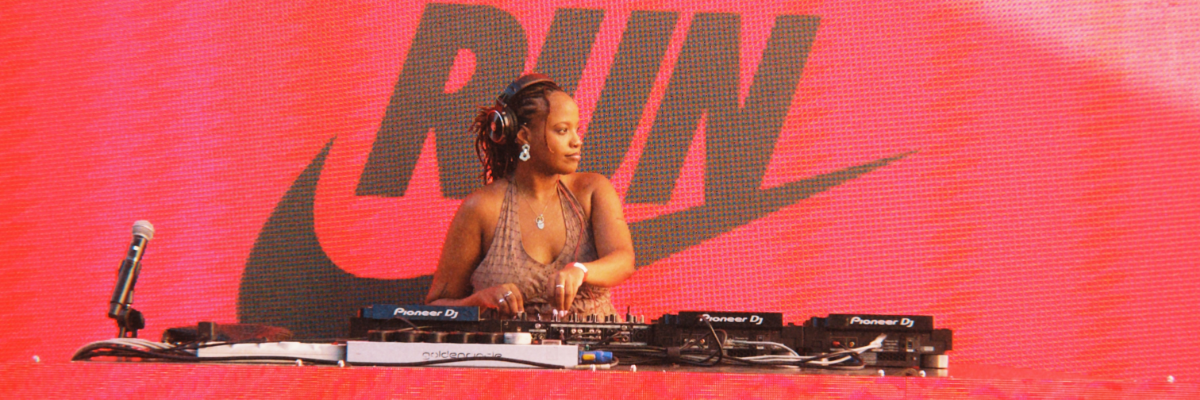
Most Cape Town DJs come up through club culture. Tshegofatso Kwele (DJ name Kwele) came up through a piano. Before the decks, before the residencies people build their names on, there were drum lessons and a guitar she taught herself, and years of reaching for whatever instrument was closest. That grounding is the thing that separates what she does now from the crowded field of emerging selectors.
By day she is an art director at Publicis, with a Gold Loerie and two Silver Pendorings, working on brands like Nando’s, Unilever and Standard Bank. It is a discipline built on shaping how people feel, fast, to a brief. At night she carries the same instinct into a booth. Two creative lives, feeding one practice, in a scene that usually keeps those things apart.
A musician first
Kwele resists the idea that any of her worlds sit in separate boxes. “I’ve never really thought of myself as belonging to one world,” she says. “Music has always been the thread running through everything.” She traces the DJing directly back to the instruments: “Long before I started DJing, I learnt piano, taught myself guitar, took drum lessons and picked up whatever instrument I could get my hands on.” For her, selecting is a continuation of that curiosity rather than a break from it. “It’s listening, learning and sharing all at once.”
That framing reshapes what the job actually is. Kwele sees the real work happening long before the first track drops. “A lot of DJing happens before you even get on the decks. It’s in the listening, the digging, the conversations, the communities you’re part of and the stories you’re exposed to.” The set is downstream of everything else she pays attention to.
Built on trust
Ask her how she has moved through the city and the answer is about relationships rather than hustle. “Trust is a journey,” she says, describing opportunities that came from showing up consistently and being someone people wanted to work with, some of those connections formed before she had even moved from Joburg to Cape Town. “Community means everything to me. It’s where you find your voice, your people and often yourself.”
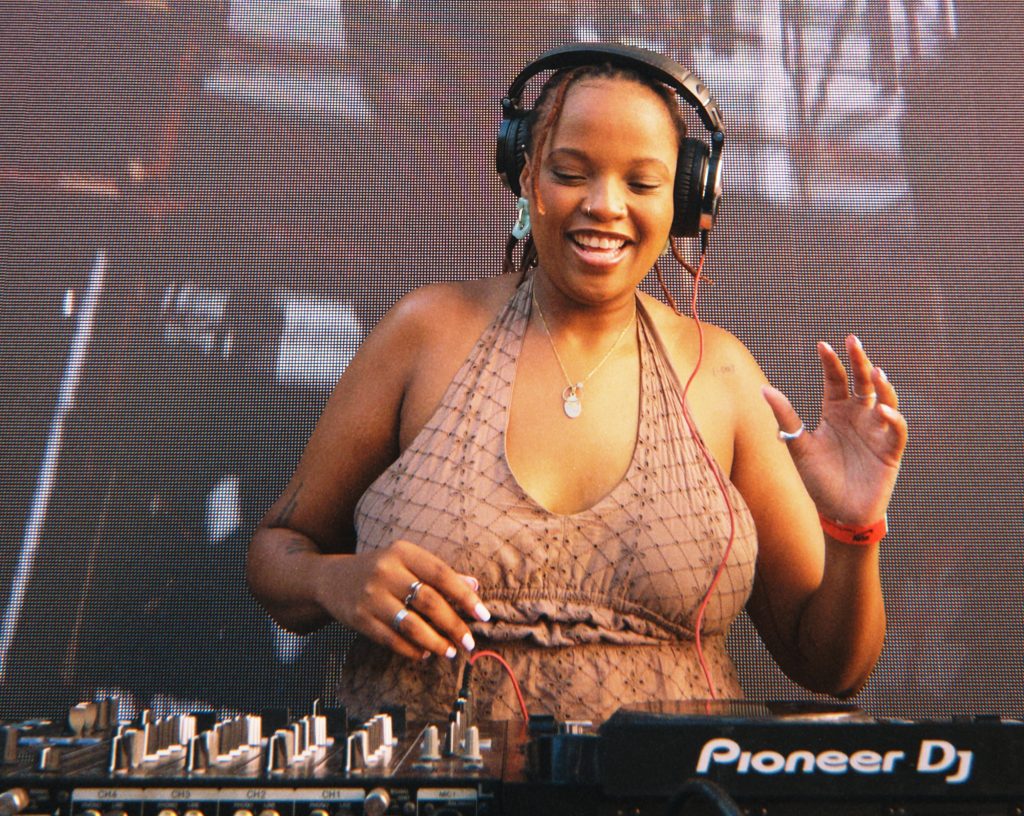
It is a quieter route than the one the algorithm rewards, and she knows it. What she describes is a practice built slowly, on rooms and people rather than numbers, which is partly why her name still travels by word of mouth more than by feed.
A city best understood sideways
Kwele’s read on Cape Town is that its strength is its spread. She would point a newcomer away from the obvious. “Listen to a local DJ before you look for a headline act,” she says, naming spaces like We House Sundays, Vinyl Digs and Friends and Family as places where people connect through a shared love of music. The through-line is care. Her favourite experiences, she says, have happened in rooms built by people who were not chasing being the coolest spot in town.
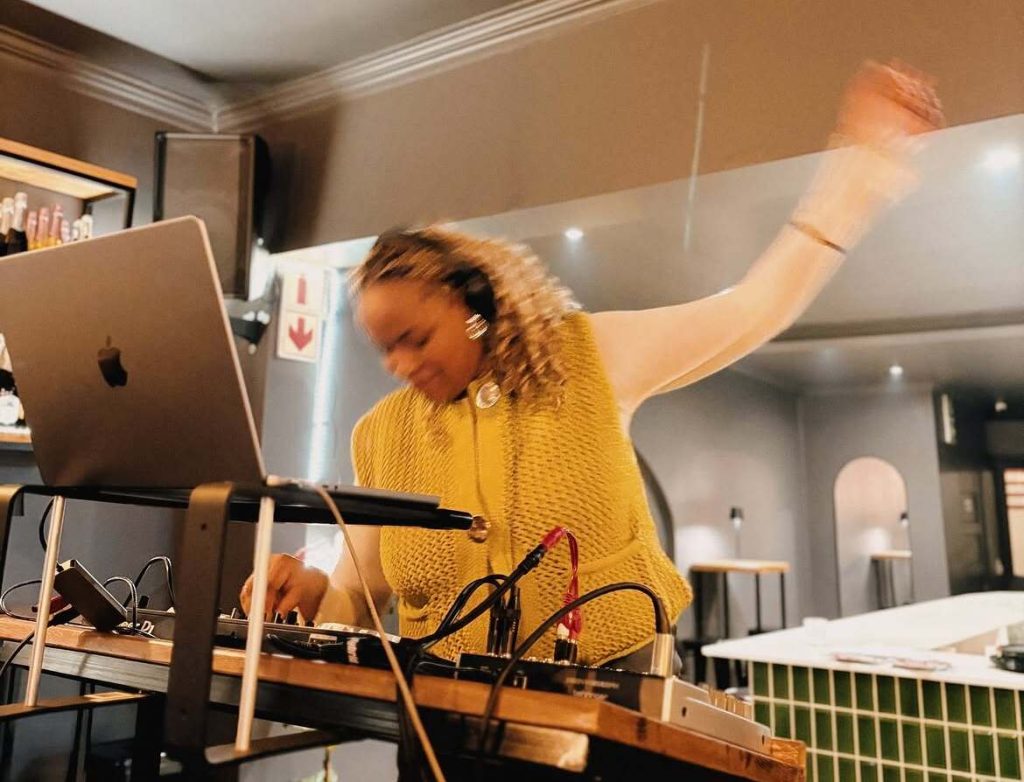
That is also the culture she says she wants to add to. “There’s enough room for all of us to grow, create and succeed.” Asked what she hopes people will say five years from now, she keeps it plain: “Five years from now, I’d love people to say that I helped bring people together.”
In a scene that too often sorts its talent into lanes, Kwele is quietly making the case that the most interesting work happens when nobody stays in one.
Cape Town does not lack DJs. What it lacks is people who can hold two crafts at once and let each one sharpen the other. Kwele is one of them, still early, still mostly word of mouth, and worth catching in a small room before those rooms stop being small.