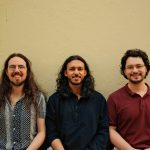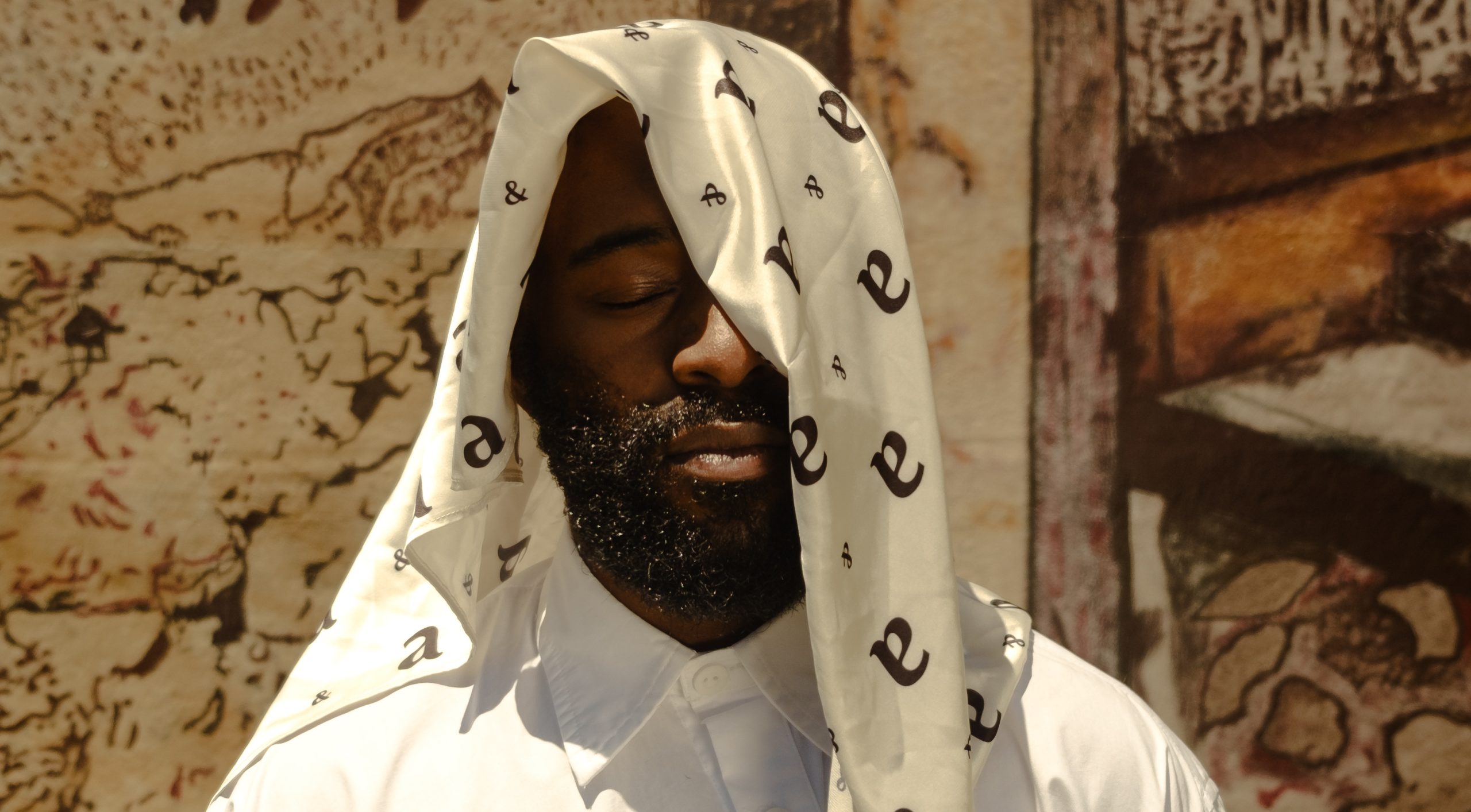
When Athenkosi Cetyana, better known by his stage name Internet Athi, left tech for music, he did not picture himself as a singer taking a leap. “I understood that I had become my own startup,” he says. Five years of information-systems work in Cape Town came with him, the funnels and the habit of treating a problem as something to be mapped. Even the album that made his name runs on that wiring. Polymorphism, released on Freedom Day this year, borrows its title from a programming idea, one object that can take many forms.
He is careful not to oversell the plan. “I won’t claim I knew it would happen exactly this way, but I will say I prepared for the chance that it would.” His first single, ‘Wena’, arrived in August 2024. Just over two years on, he is headlining the Artscape theatre on his own. That is very fast for this city, and the interesting part is not that it happened but how.
The artist as startup
Athi’s read on his own weakness is unusually clear. “My limitation was always reach,” he says, so he built around it. Wena then spread online the way his name promises it should. The N.G.U.W.E rollout that followed, which asked listeners to assemble playlists where every track began with a letter of the single, was not a label stunt with a budget behind it. “The rollout strategy for ‘Nguwe’ was literally the team and I working with what we had,” he says, crediting photographer Samkelo Peta and a small circle of creatives. The point was to let an audience carry a song before the song could carry itself. It worked, and it cost almost nothing.
The part no one sees
Ask who actually moved him from Khayelitsha to a state theatre and the answer is less a machine than a set of rooms he kept getting invited into. “There’s a lot of work behind the scenes: many calls, meetings and rooms,” he says. Concept Records became his recording home. The larger placements, Apple Music’s Up Next programme and a spot on Standard Bank’s 2026 Joy of Jazz bill, came through people who vouched for him rather than through anything he bought. “I always tell my band that we’re constantly auditioning for an audience, and you never know who’s in that audience,” he says.
The Artscape booking ran along the same wiring. It reached him through Nikilitha Mantungwa, his publisher at Kopton Music, the Dokoda Management Collective and Elvis Sibeko Studios, who folded him into the Voices of the Ages series beside two artists with decades on him, Louis Mhlanga and Zolani Mahola. “When the opportunity came, I had to take it, as scary as it was,” he says. “It feels like people are backing the work and holding my hand as I step onto bigger platforms.” The room predates the career. He watched plays there as a primary-school kid. “It feels like a big dream coming through for the kid inside me.”
The economics of a band
Here the systems story meets something it cannot optimise. Athi has committed to a full live operation when a laptop and a hard drive would be cheaper, and he does not hide the bill. “It hasn’t always been easy, particularly because of the economics of it,” he says. He got there by scaling the show the slow way, through mid-sized rooms from Gqeberha to KuGompo City (formerly East London), Cape Town’s Homecoming Centre, a sold-out run in Johannesburg and the National Arts Festival in Makhanda (formerly Grahamstown). The band runs on shared musical direction, split three ways between Athi, keys player Vuyo Nkasawe and his bassist (who has changed over time, but most recently Curtly Masemola), rather than one person steering from the front.
He refuses to dress the reasoning up as strategy. “The era I’m in now loves live music, and so I’m making live music. It’s as simple as that. My strategy isn’t always calculated. I’m often driven by my heart.” And he leaves the door open to failure. “I just hope it works out for all of us. And even if it doesn’t, I’ll be glad I tried this approach with my band.” That candour is rare in a scene that prefers the fairytale. The rise looks engineered from the outside, and in parts it was, but his own account keeps handing the credit back to timing and to the people who happened to be in the right rooms.
So the obvious question, about a career built out of Khayelitsha in two years, is whether anyone else could follow it. On formulas he is blunt. “I don’t think there’s one formula for building a music career,” he says. “But I do believe in being resourceful, understanding the business around your creativity, building relationships and creating opportunities when they don’t already exist.”
His answer in practice is ntambo, a creative technology practice he has started alongside the music to work out what artists can build for themselves and for one another. It gathers the tools and information a musician needs to do the unglamorous parts on their own terms, book stages, develop concepts, build websites and keep more agency over their work. The same thinking that got Internet Athi to Artscape, turned into something other people can use.
He is already pointing it outward. The practice has fed into projects beyond his own, among them Casa Sol and a recent listening session in Johannesburg, and its hand shows up under a tag, “made by ntambo”. The website is still being built, and for now it is as much intention as infrastructure. But it is the clearest sign of what the systems thinking was ever for. It treats his own rise as something to be written down and handed on rather than guarded, a route others might take rather than a story they watch from the seats.
On 9 October he takes that operation into the biggest room it has played, the Artscape stage he once only watched from. By his own rule he cannot know who is in the audience. He has built everything he can to be ready for whoever is.