An old-school-meets-new-school night at Tiger’s Milk is a good reason to ask where the city’s emerging rappers go after their first self-made show.
Ask Jeriah Fredericks, the co-founder and editor-in-chief of VERVE Magazine, what’s wrong with Cape Town hip-hop, and he doesn’t reach for nostalgia. “I think to summarise it’s a lack of accessible spaces, and it’s hard for newer guys entering the scene to build momentum,” he says. Fredericks has followed the city’s alternative rap circuit as a fan and a publisher. “The pieces are there, but hip hop in the city doesn’t really have a home.”
He can point to when that changed for him. About two and a half years ago, he recalls, small rooms were busy, and pop-up nights like the ones in Observatory, meant there was always a new act to see and a promoter to meet. Over the past year, he has watched those nights thin out in the circles he follows.
That is one well-placed observer’s experience, and it should be read as one. Nobody has counted Cape Town’s hip-hop nights year on year, and Jeriah is quick to add that “Things are still popping eKasi though, but because of the layout of the city everything is so far apart.” A scene that looks sparse from Observatory can be thriving a long taxi ride away. Cape Town’s geography was designed to keep people apart, and it still does that job well.
The missing middle
What Jeriah describes is a gap more than a disappearance. Artists can stage their own shows in small independent spaces, and the city has bigger stages for those who have already broken through. Between them there is very little: rooms large enough to grow an audience and open enough to let a newcomer in. He wants a proper pipeline from one to the other, and he names what stands in the way: “gatekeeping and exclusivity blocks that.”
He doesn’t let artists off either. Many, he says, “don’t have guidance as to how to scale their shows, how to put together a show, and how to build a model,” and few have come to organisations like VERVE for that help, though he wanted them to. His verdict spreads the responsibility evenly. “No one is blameless in this scenario.”
Moved, or blended?
Andrew Aitchison, the founder of A11 Agency, reads the change through the music. In his view, electronic sounds have taken over the DJ booth, while jazz “has really developed in the live space”, and the old labels matter less. He is careful about how far she pushes it. “I can’t say with much authority as to why this might be, but I do also think that genre’s at large have become less important and more blended.”
If he’s right, an obituary for Cape Town hip-hop would be premature and badly researched. Rap now turns up inside R&B sets, jazz bands and house nights, and a count of posters with “hip-hop” on them would miss much of it. A blended scene still leaves Jeriah’s question open, though. Somewhere in that mix, an original act needs a room full of people who came to hear it.
A night across the eras
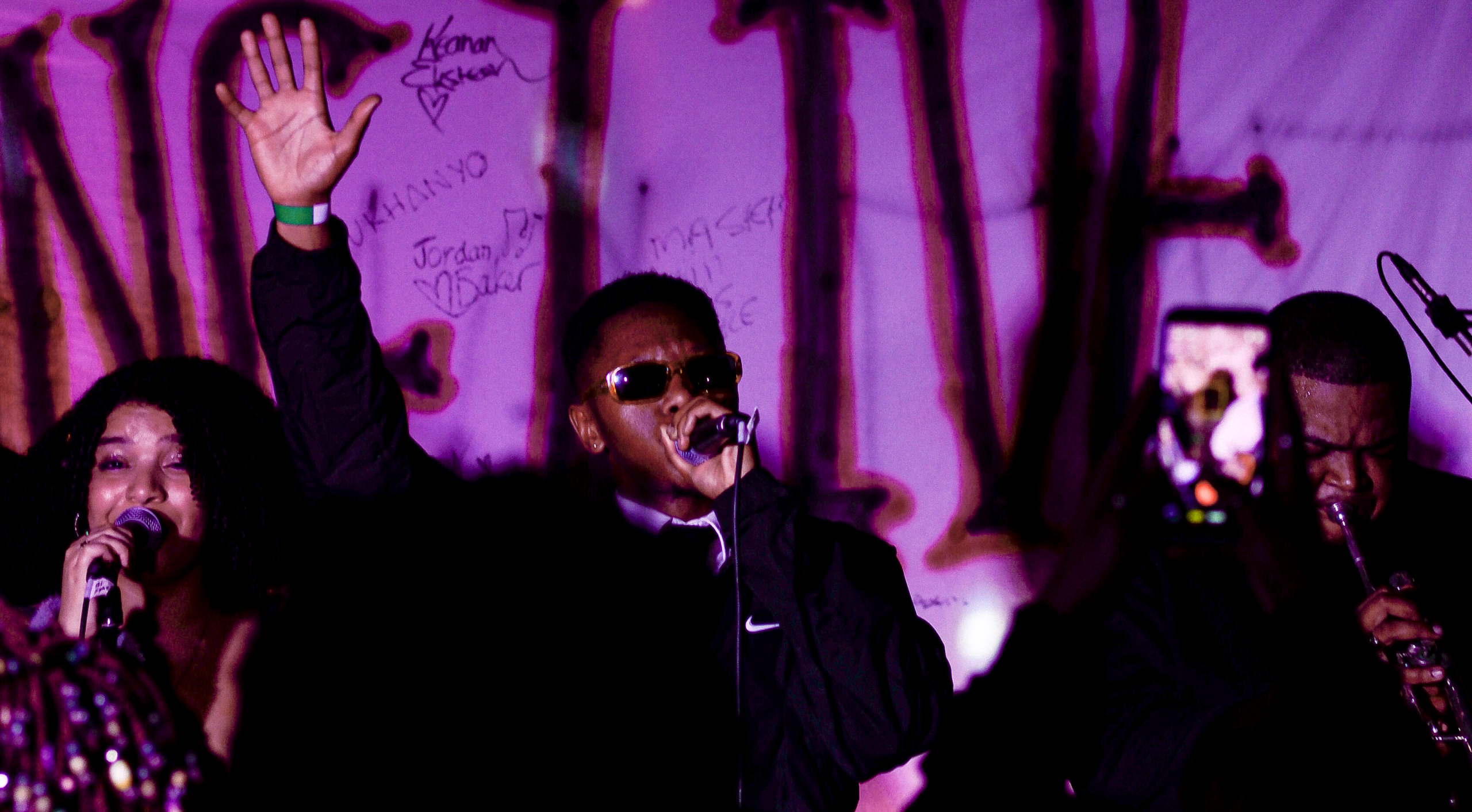
Aitchison’s answer is a bill that runs through hip-hop’s lineage. A11 Agency and LUUKHANYO & The Hii ROLLERS have put together an evening at Tiger’s Milk tonight that opens with Raiko, a Cape Town hip-hop DJ who started out in the nineties, followed by a live jazz-infused hip hop set from LUUKHANYO & The Hii ROLLERS, with Jared Charters closing on the decks until midnight. The night is built around the R&B, funk, jazz, soul and sampling that shaped the genre.
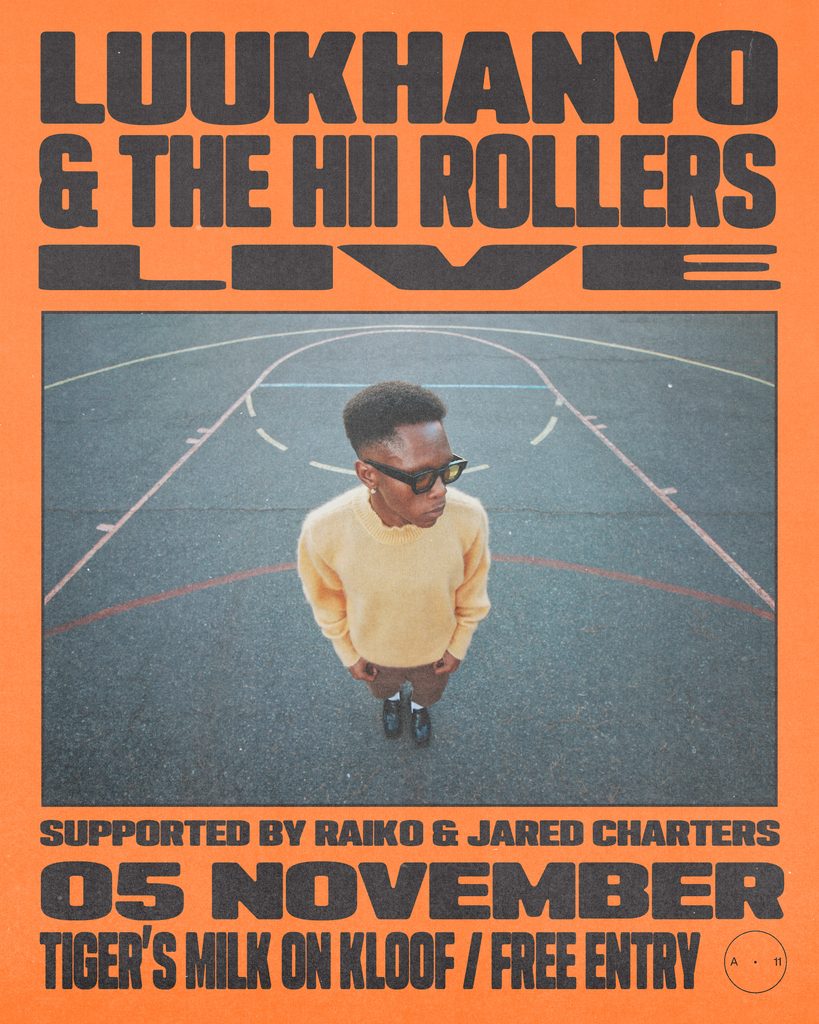
He frames the idea as a hunch worth testing. “The inspiration came from an assumption I have made, which may or may not be right. My feeling is that hip-hop is a genre that holds middle ground across age, race and class right now.” Sampling is the thread he keeps returning to, older records “re-used for new ears”.
It’s the kind of bill Jeriah’s missing middle calls for: a veteran selector, a working band and a younger DJ sharing one room, with an original live act at the centre of the evening rather than squeezed in around the club set.
What small rooms are for
LUUKHANYO sees an upside in artists filling the vacuum themselves. “I think the live music scene is still developing but in recent times I’ve seen artists go out and create their own events and platforms and that has been refreshing.”
He has played the Cape Town International Jazz Festival, and says that set brought him listeners who went looking for his work afterwards. Small shows do something else. “What smaller shows do is it allows for those people to have one-on-one conversations, pretty cool ones too, and engage with me as an artist and the other musicians I play with.”
He won’t rank one above the other. “All in all, I think both settings allow for different moments, and both can be really special.” Cape Town’s problem is that getting from one setting to the other is still left to luck and personal connections.
Book them twice
The city doesn’t need another lament for a golden age. It needs promoters who book an original act a second time, venues that treat a hip-hop night as programming worth building, and artists willing to take advice from people who have already run shows. Jeriah puts it more generously: “the building blocks are there, we just need to come together as a scene and a culture and make it happen.”
Nights like the one at Tiger’s Milk are how that middle gets built, one booking at a time. The more of them the city has, the less its next rappers will have to rely on luck.